Best places to see black & white rhinos in Africa – Kenya & Tanzania:
Kenya is home to several rhino sanctuaries dedicated to the conservation and protection of both black and white rhinoceros species.
These rhino sanctuaries play a vital role in the conservation of Kenya’s rhinoceros populations, offering visitors the opportunity to witness these magnificent animals in their natural habitat while supporting conservation efforts through tourism revenue.
Your dream safari in Kenya & East Africa is just a call or email away. Contact Adeli Kenya Safaris today. Tel: +254720564538 | WhatsApp: +254720564538 | Email: info@adelikenyasafaris.com
Here are some of the best rhino sanctuaries in Kenya:
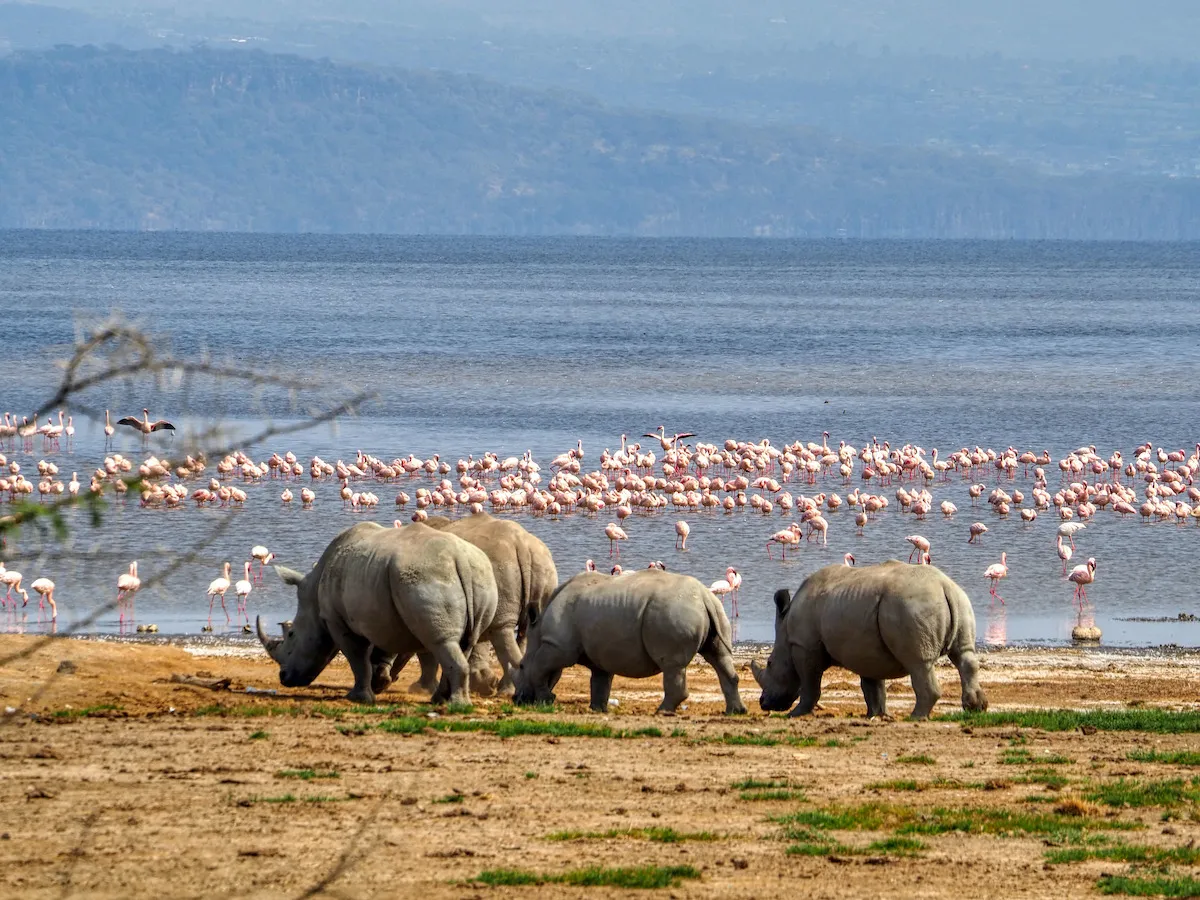
For the highest chances of seeing rhinos, especially black rhinos, Kenya’s private wildlife conservancies in Laikipia (Ol Pejeta and Lewa) and dedicated rhino sanctuaries like Solio and Lake Nakuru National Park are generally considered the best options. Nairobi National Park offers a unique and accessible rhino viewing experience close to the city.
- Ol Pejeta Conservancy: Located in Laikipia, this conservancy is widely considered one of the best places in Kenya for rhino sightings. It’s home to a significant population of black rhinos, as well as southern white rhinos, and the last two northern white rhinos in the world. The conservancy has dedicated rhino protection squads and successful breeding programs.
- Lewa Wildlife Conservancy: Also in Laikipia, Lewa has played a crucial role in rhino conservation in Kenya. It holds a significant percentage of Kenya’s black and white rhino populations. The conservancy has a long history of successful rhino protection and breeding.
- Ol Jogi Wildlife Conservancy: Situated in Laikipia County, Ol Jogi Wildlife Conservancy is a private sanctuary known for its successful rhino conservation programs. It offers guided game drives and walking safaris to observe rhinos in their natural habitat.
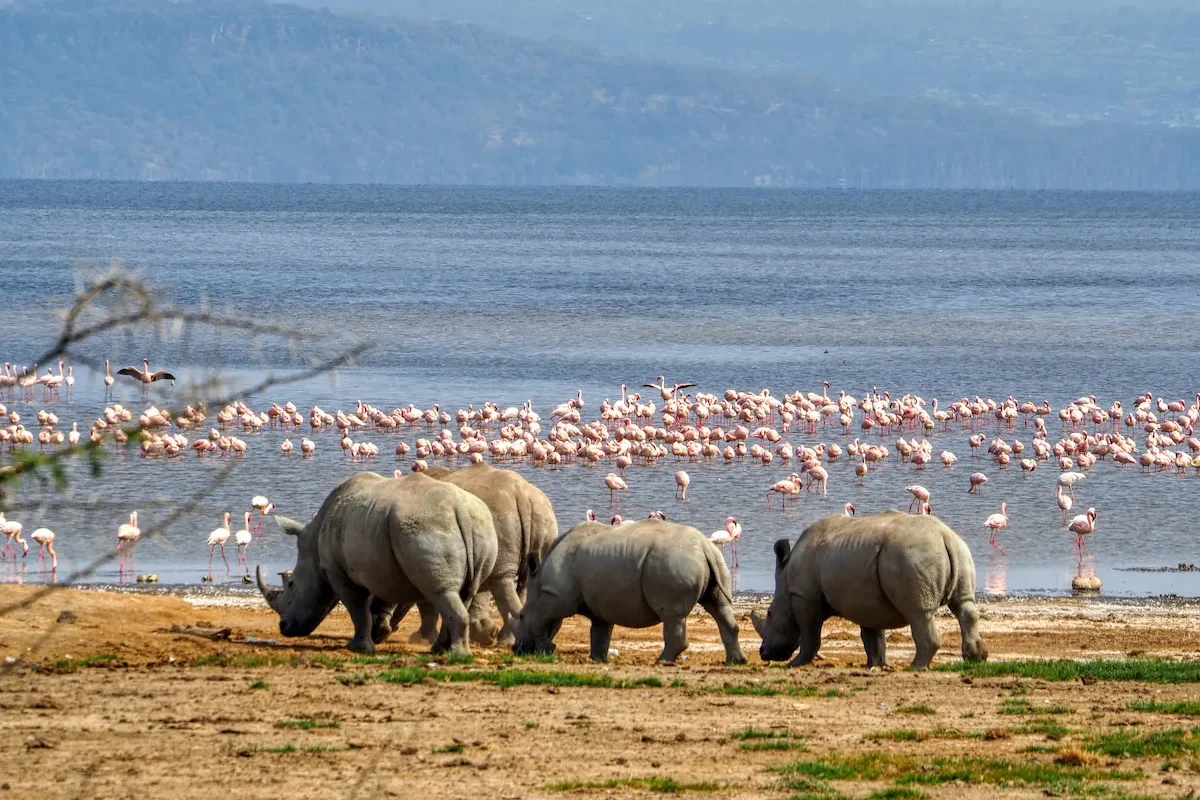
- Lake Nakuru National Park: Situated in the Great Rift Valley, this park was Kenya’s first rhino sanctuary. It boasts a healthy population of both black and white rhinos, often seen against the backdrop of the lake and its famous flamingos.
- Nairobi National Park: Remarkably located on the outskirts of Kenya’s capital, this park has a strong rhino population, both black and white. Its success in protecting and breeding rhinos has earned it the nickname “Kifaru Ark” (Kifaru meaning rhino in Swahili). You might even spot rhinos with the Nairobi skyline in the background.
- Tsavo West National Park: This large park in southeastern Kenya is home to the Ngulia Rhino Sanctuary, a fenced area established to protect and breed black rhinos. While sightings in the wider park can be more challenging due to the vegetation, the sanctuary offers a higher chance of encountering them. There’s even a unique Rhino Viewing Platform at one of the waterholes within the sanctuary.
- Solio Game Reserve: Located near Mount Kenya, Solio Ranch is Kenya’s oldest rhino sanctuary and a highly successful private breeding center. It’s known for its high rhino density, and visitors often see large numbers of rhinos in its open landscapes.
- Maasai Mara National Reserve: While famous for the Great Migration and big cats, rhinos, particularly black rhinos, can also be spotted in the Maasai Mara. They are less abundant here compared to the dedicated rhino conservancies and parks but are still part of the “Big Five” that can be seen during game drives.
- Aberdare National Park: Located in the Central Highlands, this park is home to a good number of black rhinos that inhabit its forested slopes. While the dense vegetation can make sightings a bit more challenging, it’s still a worthwhile place to try and spot them.
- Meru National Park: Situated in northern Kenya, Meru National Park has a dedicated rhino sanctuary that was restocked with rhinos from other parks. Both black and white rhinos roam freely within this protected area.
- Rhino Sanctuary, Mkomazi: This location is specifically named for rhino sightings. However, I don’t have detailed information about the likelihood of seeing rhinos here.
- Ngorongoro Conservation Area: This is a highly recommended location for wildlife viewing. Reviews suggest a good chance of seeing rhinos, along with other animals. The area is described as having the highest concentration of animals in the world.
- Ngorongoro Rhino Lodge: This lodge is located near the Ngorongoro Crater and is a good place to stay for wildlife viewing. While the information doesn’t explicitly state how easy it is to see rhinos from the lodge, its proximity to the crater suggests a good possibility. Reviews highlight the beautiful natural surroundings and wildlife sightings.
Frequently asked questions about rhinos:
How many species of rhinos are there?
There are five species of rhinoceros in the world:
- White Rhino (Ceratotherium simum): Found in Africa.
- Black Rhino (Diceros bicornis): Found in Africa.
- Greater One-Horned Rhino (Rhinoceros unicornis), also known as the Indian Rhino: Found in India and Nepal.
- Sumatran Rhino (Dicerorhinus sumatrensis): Found in Sumatra and Borneo (Indonesia and Malaysia). They are the closest living relative to the extinct woolly rhinos.
- Javan Rhino (Rhinoceros sondaicus): Found only in Ujung Kulon National Park in Java, Indonesia, making it one of the rarest large mammals on Earth.
What are the main differences between black and white rhinos?
Despite their names, both black and white rhinos are actually gray. The name “white” comes from the Afrikaans word “wyd,” meaning “wide,” referring to their wide, square lip used for grazing. Black rhinos have a pointed upper lip adapted for browsing on leaves and shrubs.
What is a group of rhinos called?
A group of rhinos is called a “crash.” Males are called “bulls,” females are called “cows,” and their young are called “calves.”
What are rhino horns made of?
Rhino horns are made of keratin, the same protein that forms our hair and nails. Unlike the horns of other animals, a rhino’s horn is not attached to its skull and continues to grow throughout its life.
How good is a rhino’s eyesight?
Rhinos have poor vision and rely heavily on their excellent sense of smell and hearing. They might struggle to see a still person from 30 meters away.
How do rhinos communicate?
Rhinos communicate through a variety of sounds like honks, snorts, growls, trumpet calls, and screams. They also use their urine and dung (in communal dung piles called middens or latrines) to leave scent markings that convey information about their presence, sex, and reproductive status.
What do rhinos eat?
Rhinos are herbivores. White rhinos primarily graze on grass, while black rhinos browse on leaves, twigs, and fruits. Greater one-horned rhinos eat grasses and plants near water. Sumatran rhinos have a varied diet of leaves, fruits, bark, and twigs. Javan rhinos prefer moist plants in lowland areas but can eat over 100 different plant species.
How big can rhinos get?
White rhinos are the largest rhino species and one of the largest land mammals, weighing up to 3,500 kg (over 3 tons). Sumatran rhinos are the smallest, weighing around 600 kg.
Why are rhinos endangered?
The primary threats to rhinos are:
- Poaching: They are heavily poached for their horns, which are used in traditional Asian medicine (despite having no proven medicinal properties) and as status symbols.
- Habitat Loss: Human activities like agriculture, deforestation, and development reduce and fragment rhino habitats.
- Climate Change: Changing weather patterns can lead to habitat degradation and loss of food sources.
- Small Population Sizes: Some rhino species, like the Javan and Sumatran rhinos, have very small and isolated populations, making them vulnerable to extinction.
What is the current status of rhino populations?
Three of the five rhino species (Black, Javan, and Sumatran) are listed as “Critically Endangered” by the IUCN. The White Rhino is classified as “Near Threatened,” and the Greater One-Horned Rhino is “Vulnerable.” While conservation efforts have led to increases in some populations, poaching remains a significant threat.
How severe is rhino poaching?
Rhino poaching reached a crisis point in the early 2000s. While poaching numbers have decreased from the peak in 2015, at least one rhino is still killed every day in Africa. South Africa, home to the largest rhino populations, has been heavily impacted. In 2023, at least 586 rhinos were poached in Africa.
What conservation efforts are in place to protect rhinos?
Numerous organizations and governments are involved in rhino conservation, including:
- Anti-poaching patrols and law enforcement: To protect rhinos in their natural habitats.
- Habitat protection and management: To ensure rhinos have safe and suitable living environments.
- Translocation: Moving rhinos to safer areas to establish new populations or increase genetic diversity.
- Monitoring: Tracking rhino populations to understand their movements and health.
- Community engagement: Working with local communities to promote rhino conservation and reduce human-wildlife conflict.
- Dehorning: Removing rhino horns to deter poachers (though this is not a foolproof solution).
- Demand reduction: Efforts to decrease the demand for rhino horn in consumer countries through education and awareness campaigns.
- Captive breeding programs: To increase rhino numbers and potentially reintroduce them to the wild.
What can I do to help rhino conservation?
You can support rhino conservation by:
- Donating to reputable rhino conservation organizations.
- Raising awareness about the plight of rhinos.
- Avoiding the purchase of products that could be derived from endangered species.
- Supporting eco-tourism initiatives that benefit rhino conservation and local communities.
Interesting Rhino Facts
- The word “rhinoceros” comes from Greek words “rhino” (nose) and “ceros” (horn).
- Rhinos have been around for millions of years, and their ancestors roamed Europe, Asia, and North America. Some extinct rhino relatives were enormous, like the Paraceratherium, the largest land mammal ever known.
- Black rhinos have a prehensile (grasping) upper lip that helps them pick leaves and twigs.
- Rhinos enjoy wallowing in mud to cool down and protect their skin from the sun and insects.
- African rhinos have a symbiotic relationship with oxpeckers (tick birds) that eat ticks and other parasites off their skin and can also alert rhinos to danger.
- A white rhino can produce up to 50 pounds of dung per day, which helps fertilize the environment and disperse seeds.
- The closest living relatives of rhinos are tapirs, horses, and zebras.
- Most wild rhino calves stay with their mothers for 2-4 years and often don’t meet their fathers, as male rhinos are generally solitary and territorial.