Ishaqbini Hirola Community Conservancy is a vital community-based wildlife conservation project located in Ijara Sub County, Garissa County, Kenya. It lies on the eastern banks of the Tana River, approximately 38km from Masalani.
Here’s a summary of key information about the Ishaqbini Conservancy:
- Establishment and Governance: Founded in 2005 as a Community Based Organization (CBO), it later registered as a not-for-profit company in 2013. The conservancy is owned and managed by the local Abdulla tribe of Somali ethnicity, encompassing the communities of Hara, Korisa, Kotile, and Abalatiro in the Masalani ward. It is a member conservancy of the Northern Rangelands Trust Kenya (NRT-Kenya).
- Size: The conservancy covers an estimated total area of 68,000 hectares (680 square kilometers) or approximately 168,000 acres. Some sources mention a smaller fenced sanctuary within the larger conservancy.
- Conservation Focus: The primary goal of the Ishaqbini Conservancy is to conserve the critically endangered Hirola antelope (Beatragus hunteri), which is endemic to this region and the world’s rarest antelope. It serves as a core refuge and breeding ground for this species. The community successfully prevented government efforts to translocate the Hirola from its native land.
- Wildlife: Besides the Hirola, the conservancy is home to a variety of other wildlife, including:
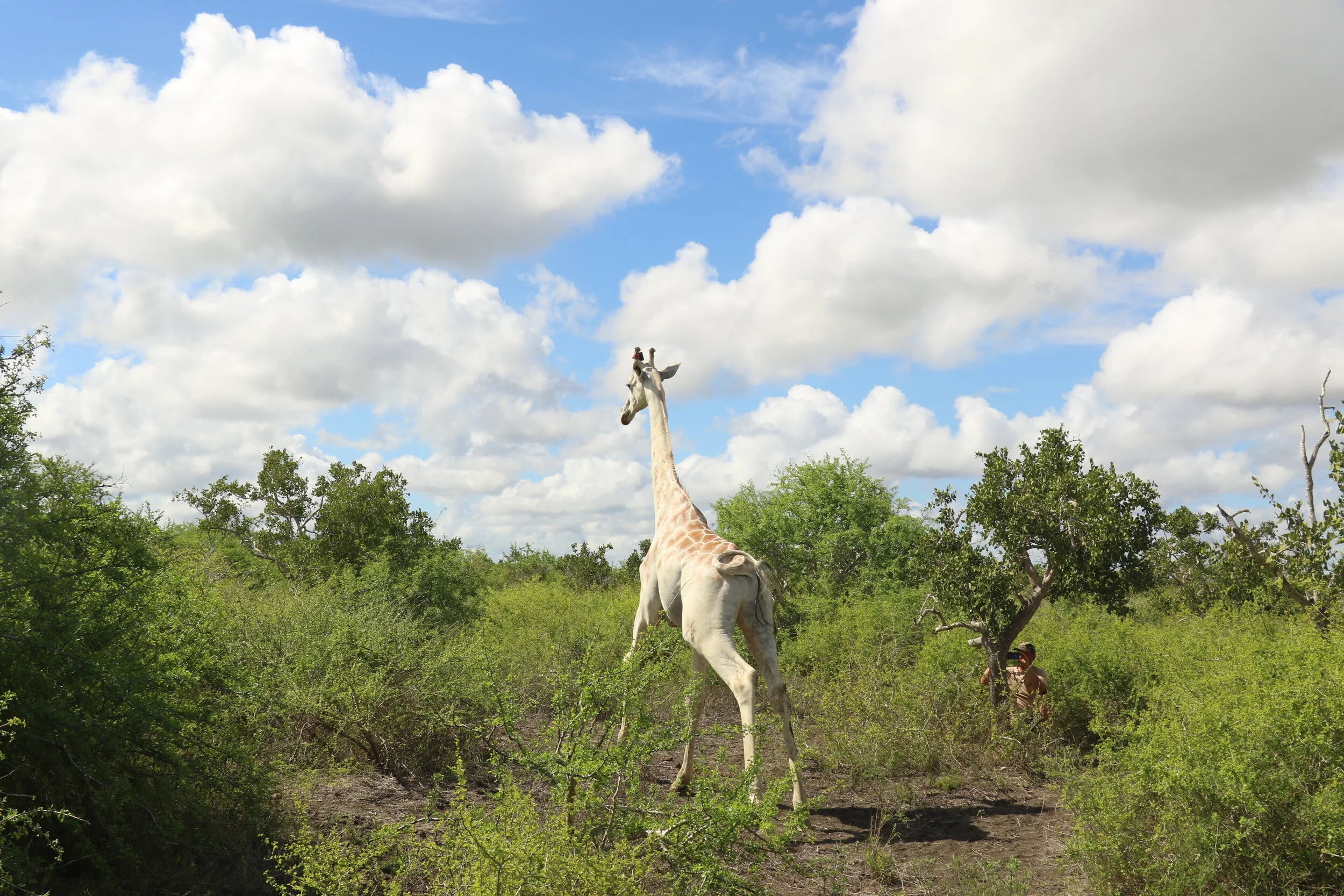
- Rare White Giraffe
- Elephants
- Zebras
- Giraffes
- Buffaloes
- Topi
- Gerenuk
- Cheetahs
- Leopards
- Lions
- Wild dogs
- Ostrich
- Oryx
- Hippos
- Nile Crocodiles
- Tana River Red Colobus monkeys
- Tana Mangabey The area is also recognized as an Important Bird Area (IBA), hosting over 350 bird species, representing 60% of all bird families found in Kenya.
- Community Involvement: The local community is central to the conservancy’s success. They benefit through employment (including community rangers), microfinance programs, education support, and access to clean water. The community actively participates in protecting wildlife and managing the rangelands.
- Hirola Sanctuary: A 27 square kilometer predator-proof sanctuary was established within the conservancy in August 2012 to provide a secure breeding environment for the Hirola population. The population within the sanctuary has grown significantly since its establishment.
- Conservation Efforts: These include anti-poaching patrols, wildlife monitoring, livestock vaccination programs, and rangeland restoration initiatives (clearing invasive species).
- Tourism: While still developing, the conservancy has the potential to become a key tourist attraction, offering opportunities to see the endangered Hirola and other unique wildlife in a community-led conservation setting.
The Ishaqbini Hirola Community Conservancy stands as a significant example of community-led conservation focused on protecting a highly endangered species and benefiting the local people while preserving their natural and cultural heritage.