Iceland Holiday Tour Packages from Kenya – Discover Iceland with Adeli Kenya Safaris
Discover the extraordinary beauty of Iceland with tailor-made Iceland holiday tour packages from Kenya by Adeli Kenya Safaris. From the spectacular Northern Lights and dramatic black sand beaches to majestic glaciers, powerful waterfalls, steaming geothermal springs and volcanic landscapes, Iceland offers an unforgettable holiday experience for travellers seeking something truly different.
Known as the Land of Fire and Ice, Iceland is a destination where natural wonders take centre stage. You can relax in warm geothermal lagoons surrounded by volcanic scenery, explore ancient ice caves, watch whales in the North Atlantic, walk along dramatic coastlines and experience the magical glow of the Midnight Sun during summer.
Adeli Kenya Safaris helps travellers from Nairobi and across Kenya plan memorable Iceland holidays, with tailor-made itineraries, accommodation arrangements, flight guidance, sightseeing experiences and practical travel support. Whether you are planning a romantic escape, honeymoon, family holiday, photography trip, adventure holiday or once-in-a-lifetime Northern Lights experience, we can help you create an Iceland journey suited to your interests, travel dates and budget.
Why Visit Iceland?
Iceland is one of Europe’s most distinctive holiday destinations. Its landscapes are shaped by volcanic activity, glaciers, geothermal energy and the powerful Atlantic Ocean. Few countries offer such a remarkable combination of natural attractions within one destination.
Here are some of the reasons to include Iceland on your next international holiday from Kenya:
-
The Northern Lights: Witness the spectacular Aurora Borealis dancing across dark winter skies.
-
The Blue Lagoon: Relax in naturally heated geothermal waters surrounded by a dramatic lava field.
-
Waterfalls: Discover impressive cascades such as Skógafoss, Seljalandsfoss and Gullfoss.
-
Glaciers and ice caves: Explore extraordinary frozen landscapes and, during suitable seasons, guided natural ice caves.
-
Black sand beaches: Walk along striking volcanic shorelines, including the famous Reynisfjara Beach.
-
Whale watching: Join boat excursions to look for whales and other marine wildlife.
-
Volcanic scenery: Discover lava fields, geothermal areas, volcanic craters and steaming hot springs.
-
Scenic road trips: Travel through some of the world’s most memorable coastal and mountain landscapes.
-
Outdoor adventures: Enjoy glacier walks, snowmobiling, horse riding, hiking, kayaking and more.
-
Unique seasonal experiences: Experience the Midnight Sun in summer or the Northern Lights during the darker months.
Iceland is suitable for couples, families with age-appropriate activities, solo travellers, adventure enthusiasts and visitors who enjoy nature, photography and distinctive cultural experiences.
Top Things to Do in Iceland
1. See the Northern Lights
The Northern Lights, also known as the Aurora Borealis, are among Iceland’s most famous natural attractions. This extraordinary light display occurs when charged particles from the Sun interact with gases in the Earth’s atmosphere, producing colourful patterns across the night sky.
The lights may appear green, pink, purple or occasionally red, moving in waves and arcs across the darkness. Iceland’s relatively low population density and wide open landscapes make it an appealing destination for Aurora viewing.
The Northern Lights season generally runs from September to April, when nights are sufficiently dark. Visibility depends on solar activity, cloud cover, darkness and local weather conditions. Sightings cannot be guaranteed.
Popular ways to experience the Northern Lights include:
-
Guided Northern Lights minibus excursions from Reykjavík.
-
Private Northern Lights tours away from city lights.
-
Self-drive trips to quieter countryside locations.
-
Northern Lights photography experiences.
-
Overnight stays in countryside hotels with dark-sky surroundings.
For the best opportunity, consider spending several nights in Iceland rather than planning your entire holiday around a single Aurora excursion.
2. Visit the Blue Lagoon
The Blue Lagoon is one of Iceland’s best-known geothermal attractions. Located in a volcanic landscape on the Reykjanes Peninsula, it is famous for its milky-blue geothermal water, mineral-rich surroundings and contemporary spa facilities.
Visitors can enjoy warm bathing waters, relaxation areas, spa treatments, saunas and restaurants. The contrast between the warm water and the surrounding dark lava landscape makes the experience particularly memorable.
The Blue Lagoon is conveniently located between Keflavík International Airport and Reykjavík, making it a possible addition to an arrival or departure day, depending on flight times and transfers.
Advance reservations are strongly recommended. Access arrangements can change, particularly when volcanic or seismic activity affects the Reykjanes Peninsula.
3. Explore the Golden Circle
The Golden Circle is one of Iceland’s most popular sightseeing routes. It is an excellent introduction to the country’s geology, landscapes and history.
The traditional route includes three major attractions.
Þingvellir National Park
Þingvellir is a UNESCO World Heritage Site with significant geological and historical importance. It is associated with the establishment of Iceland’s historic parliament and lies in a dramatic rift valley between the North American and Eurasian tectonic plates.
Activities include walking along marked trails, viewing the rift landscape, photography and, for suitably qualified and equipped visitors, snorkelling or diving in Silfra’s exceptionally clear water.
Geysir Geothermal Area
This geothermal area is famous for its hot springs and erupting geysers. Although the original Great Geysir is not consistently active, Strokkur regularly erupts, sending hot water into the air.
Visitors can explore the marked paths and observe steaming vents, bubbling pools and colourful mineral deposits.
Gullfoss Waterfall
Gullfoss, meaning Golden Falls, is one of Iceland’s most impressive waterfalls. The Hvítá River plunges through a dramatic canyon in two stages, creating a powerful spectacle.
Viewing platforms provide excellent opportunities for photographs, although paths may become slippery during winter.
4. Discover Iceland’s Spectacular Waterfalls
Iceland is home to countless waterfalls, ranging from easily accessible roadside attractions to remote cascades reached by hiking.
Some of the most memorable include:
Seljalandsfoss
This famous waterfall is particularly distinctive because visitors can walk behind the falling water when the pathway is open and conditions are safe. Waterproof clothing is advisable.
Skógafoss
One of Iceland’s most recognisable waterfalls, Skógafoss drops from a considerable height and creates impressive mist and rainbows on sunny days. A staircase beside the waterfall provides access to elevated viewpoints.
Svartifoss
Located in Vatnajökull National Park, Svartifoss is surrounded by distinctive dark basalt columns. The waterfall is reached by a walking trail from the visitor area.
Dettifoss
Situated in North Iceland, Dettifoss is renowned for its immense power and volume of water. It is one of Europe’s most powerful waterfalls and a highlight of the Diamond Circle sightseeing route.
Goðafoss
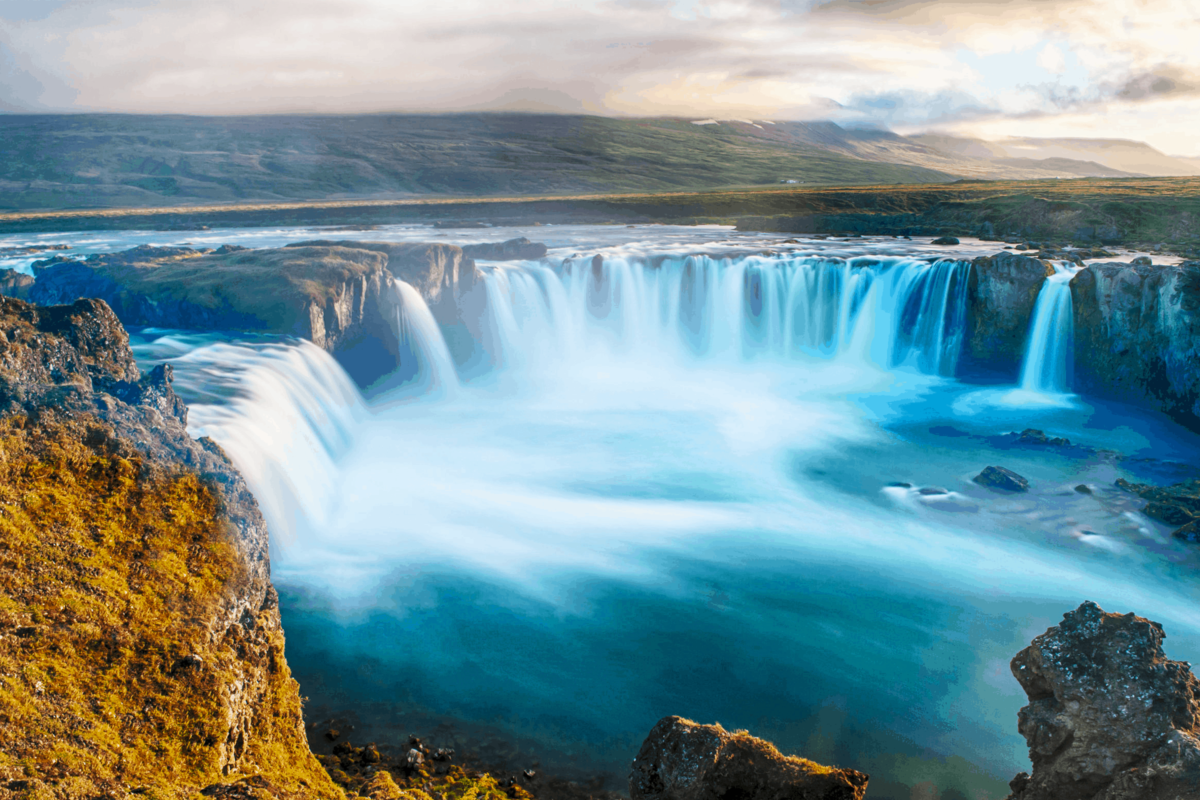
Known as the Waterfall of the Gods, Goðafoss is a beautiful horseshoe-shaped waterfall in North Iceland. Its accessible viewpoints make it a popular stop for visitors exploring the region.
Kirkjufellsfoss
This photogenic waterfall sits near the distinctive Kirkjufell mountain on the Snæfellsnes Peninsula. It is particularly popular with landscape photographers.
Hraunfossar and Barnafoss
These neighbouring waterfalls in West Iceland offer contrasting scenery. Hraunfossar consists of water emerging through lava fields, while Barnafoss flows through a narrow rocky gorge.
5. Walk on Iceland’s Glaciers
Glaciers cover a significant part of Iceland and are among the country’s most remarkable natural features.
Visitors can experience these immense ice formations through guided glacier walks, ice-cave excursions and scenic viewpoints.
Popular glacier experiences include:
-
Vatnajökull Glacier: One of Europe’s largest ice caps, covering a vast area in southeast Iceland.
-
Sólheimajökull Glacier: A popular location for guided glacier walking on the South Coast.
-
Langjökull Glacier: Known for glacier excursions and specially organised ice-tunnel experiences.
-
Snæfellsjökull Glacier: A striking glacier-capped volcano on the Snæfellsnes Peninsula.
-
Mýrdalsjökull Glacier: An impressive ice cap in South Iceland.
Glacier activities must be undertaken with qualified guides and appropriate equipment. Ice conditions, access and excursion availability vary by season.
6. Explore Natural Ice Caves
Natural ice caves are among Iceland’s most extraordinary winter attractions. These caves form within glaciers and can display beautiful shades of blue, white and translucent ice.
The experience involves entering a frozen landscape shaped by flowing water and changing temperatures.
Vatnajökull is particularly well known for seasonal ice-cave excursions. Other glacier areas may also offer guided experiences depending on conditions.
Natural ice caves are not permanent attractions. Their locations, safety and accessibility change, so visitors should only enter with authorised specialist guides.
7. Experience Whale Watching
Iceland is an excellent destination for marine wildlife experiences. Whale-watching excursions operate from several coastal towns and offer opportunities to observe different whale species.
Commonly sought-after sightings include:
-
Humpback whales.
-
Minke whales.
-
White-beaked dolphins.
-
Harbour porpoises.
-
Orcas in certain areas and seasons.
Popular departure points include Reykjavík, Húsavík, Akureyri and other coastal communities.
Húsavík is particularly well known for whale watching and is often described as one of Europe’s leading whale-watching destinations.
Sightings are never guaranteed, as these are wild animals in their natural environment.
8. Visit the Snæfellsnes Peninsula
The Snæfellsnes Peninsula is often called Iceland in miniature because it offers a remarkable variety of landscapes within a relatively compact area.
Highlights include:
-
Snæfellsjökull National Park.
-
Kirkjufell Mountain.
-
Kirkjufellsfoss Waterfall.
-
Arnarstapi coastal village.
-
Lóndrangar sea cliffs.
-
Djúpalónssandur Beach.
-
Búðir Black Church.
-
Dramatic lava fields and coastal scenery.
The peninsula is a wonderful addition to a longer Iceland holiday, particularly for visitors interested in photography, geology and scenic drives.
9. Explore Reykjavík
Reykjavík is Iceland’s capital and the country’s main cultural, commercial and transport centre. It offers a relaxed city atmosphere, interesting architecture, museums, restaurants, galleries and waterfront views.
Popular attractions include:
Hallgrímskirkja Church: An iconic church with a distinctive architectural design and panoramic city views from its tower.
Harpa Concert Hall: A striking waterfront building known for its contemporary glass architecture and cultural performances.
Sun Voyager: A celebrated sculpture overlooking the sea, often visited for photographs.
Perlan: A museum and exhibition attraction where visitors can learn about Iceland’s natural environment.
Reykjavík Old Harbour: A lively area with restaurants, cafés and whale-watching departure points.
Laugavegur: One of the city’s principal shopping and dining streets.
Reykjavík is an excellent base for day trips to the Golden Circle, Blue Lagoon, South Coast and Northern Lights excursions.
10. Visit the Diamond Beach
Diamond Beach, near Jökulsárlón Glacier Lagoon in southeast Iceland, is one of the country’s most photographed coastal attractions.
Pieces of ice break away from the nearby glacier lagoon and drift towards the Atlantic Ocean. Some of these ice fragments wash ashore on the black volcanic sand, creating a striking contrast that resembles diamonds scattered across the beach.
The appearance of the beach changes constantly, depending on the movement of ice, tides, weather and season.
Visitors should never climb on icebergs or approach dangerous waves for photographs.
11. Explore Jökulsárlón Glacier Lagoon
Jökulsárlón is a spectacular glacial lagoon where icebergs break away from Breiðamerkurjökull Glacier and float towards the ocean.
Visitors can admire the floating ice from the shore or join suitable seasonal boat excursions.
The lagoon is particularly beautiful in changing light and is often combined with a visit to Diamond Beach.
12. Experience Icelandic Horse Riding
The Icelandic horse is a distinctive breed known for its compact build, thick coat and unique gaits.
Horse-riding excursions are available in several parts of the country and can be suitable for beginners as well as experienced riders, depending on the operator and excursion.
Riding through open countryside, lava fields or scenic valleys provides a different perspective on Iceland’s landscapes.
13. Explore Volcanic Landscapes and Geothermal Areas
Iceland sits on an active volcanic zone and offers remarkable opportunities to learn about the forces shaping the Earth.
Interesting geothermal and volcanic areas include:
-
Hverir geothermal area near Lake Mývatn.
-
Krafla volcanic region in North Iceland.
-
Gunnuhver hot springs on the Reykjanes Peninsula.
-
The volcanic landscapes of the Reykjanes Peninsula.
-
Lake Mývatn’s lava formations.
-
Eldhraun lava field in South Iceland.
Visitors should remain on marked paths and respect safety closures. Volcanic and geothermal environments can contain unstable ground, extremely hot water and hazardous gases.
14. Discover Lake Mývatn and the Diamond Circle
Lake Mývatn is one of North Iceland’s most interesting natural destinations. Its surroundings feature volcanic craters, lava formations, geothermal activity and rich birdlife.
Attractions include:
-
Dimmuborgir lava formations.
-
Hverir geothermal fields.
-
Krafla volcanic area.
-
Skútustaðagígar pseudocraters.
-
Mývatn Nature Baths, subject to current operating arrangements.
The wider Diamond Circle route also includes Dettifoss, Goðafoss, Ásbyrgi Canyon and Húsavík.
15. Enjoy Snowmobiling and Winter Adventures
Winter visitors can enjoy a variety of guided snow-based activities, depending on weather and operating conditions.
Popular options include:
-
Snowmobiling on selected glaciers.
-
Guided glacier walks.
-
Ice-cave excursions.
-
Winter photography tours.
-
Northern Lights excursions.
-
Scenic countryside drives.
Some activities have minimum age, health, driving licence or experience requirements. These should be checked before booking.
16. Experience the Midnight Sun
During the Icelandic summer, daylight lasts exceptionally long, particularly around the June solstice.
The Midnight Sun creates an unusual travel experience, with bright skies late into the evening and opportunities to explore landscapes for extended periods.
Summer is an excellent time for sightseeing, hiking, road trips, birdwatching and exploring areas that are difficult to access during winter.
Beaches in Iceland: A Guide to the Country’s Most Beautiful Coastlines
Iceland’s beaches are very different from the tropical white-sand beaches found in destinations such as Kenya, Zanzibar or the Maldives. Many are formed from black volcanic sand, while others feature golden sand, pebbles, dramatic cliffs, ice fragments or unusual rock formations.
They are beautiful for sightseeing, photography, coastal walks and nature experiences. However, Iceland’s Atlantic coastline can be dangerous. Powerful waves, cold water, strong currents and sudden changes in weather make swimming unsuitable at many locations.
The following guide covers notable beaches and coastal areas across Iceland. It is not an exhaustive inventory of every small or unnamed stretch of shoreline.
South Iceland Beaches
1. Reynisfjara Black Sand Beach
Reynisfjara is Iceland’s most famous black sand beach. Located near the village of Vík, it is known for its volcanic sand, basalt columns, sea caves and Reynisdrangar rock formations.
It is a spectacular photography destination, but it is also extremely dangerous because of powerful sneaker waves. Visitors must follow beach warning systems and stay well back from the water.
2. Diamond Beach
Located beside Jökulsárlón Glacier Lagoon, Diamond Beach is famous for pieces of glacial ice resting on black volcanic sand.
It is particularly popular with photographers and visitors exploring southeast Iceland.
3. Vík Beach
The coastal area around Vík offers beautiful views of black sand, cliffs and offshore rock formations. It is a convenient stop when exploring the South Coast.
4. Dyrhólaey Coastal Beach
The coastline around Dyrhólaey features dramatic cliffs, a natural rock arch and broad views of black sand beaches.
The area is also known for seabirds, including puffins during suitable nesting periods.
5. Sólheimasandur
This expansive black sand area is famous for the abandoned aircraft wreck that has become a popular photography attraction.
The landscape is stark and atmospheric, although visitors should check current access arrangements and prepare for the exposed conditions.
6. Kirkjubæjarklaustur and Nearby Coastal Areas
The wider South Iceland region includes striking black-sand landscapes, river plains and volcanic formations. Coastal exploration should be planned around road conditions and safe access points.
7. Stokksnes Beach
Near Höfn, Stokksnes is known for its dramatic black sand dunes and views of Vestrahorn Mountain.
It is one of Iceland’s most photogenic coastal landscapes.
8. Eyrarbakki Beach
Eyrarbakki is a historic coastal settlement south of Reykjavík. Its shoreline offers a quieter coastal experience, with views of the North Atlantic and traditional village surroundings.
9. Þorlákshöfn Coastal Areas
The coastline around Þorlákshöfn features open Atlantic scenery and stretches of dark sand and rocky shore. It is a good option for travellers exploring the southern coastal region.
Snæfellsnes Peninsula and West Iceland Beaches
10. Djúpalónssandur Beach
Djúpalónssandur is a dramatic black pebble beach on the Snæfellsnes Peninsula. It is known for its unusual rock formations and historic fishing-related remains.
The area also features lifting stones traditionally associated with testing the strength of fishermen.
11. Skarðsvík Beach
Skarðsvík is one of Iceland’s distinctive light-coloured beaches, with golden sand and clear coastal views. Its appearance contrasts with the more common black volcanic beaches.
12. Ytri Tunga Beach
Ytri Tunga is particularly known for seal watching. Visitors may spot seals resting on rocks along the shore, especially during suitable periods.
It is a wonderful location for wildlife photography, provided visitors keep a respectful distance.
13. Búðir Beach
The coastal area around Búðir features pale sand, lava formations and views of the surrounding landscape. The nearby black church is a popular photography attraction.
14. Arnarstapi Coastline
Arnarstapi is known for dramatic sea cliffs, rock formations, coastal walking routes and seabird habitats. It is more of a scenic coastal destination than a conventional swimming beach.
15. Hellnar Coastal Area
Hellnar offers striking coastal scenery with cliffs, sea caves and interesting geological formations. It can be explored as part of a walking route along the Snæfellsnes Peninsula.
16. Kirkjufell Coastal Area
The shoreline near Kirkjufell Mountain and Grundarfjörður offers beautiful mountain-and-sea scenery. It is particularly popular for landscape photography.
17. Langaholt Beach
Langaholt and the surrounding coastline offer expansive coastal views and a peaceful atmosphere on the Snæfellsnes Peninsula.
Westfjords Beaches
The Westfjords are among Iceland’s most remote and scenic regions. They are especially attractive for visitors who enjoy quiet landscapes, coastal wildlife and dramatic scenery.
18. Rauðasandur Beach
Rauðasandur is famous for its reddish-golden sand, which contrasts with Iceland’s more familiar black beaches.
The beach stretches across a beautiful coastal landscape and is particularly appealing for photography and peaceful walks.
19. Breiðavík Beach
Breiðavík is a beautiful sandy coastal area in the Westfjords, known for its wide shoreline and remote atmosphere.
20. Látrabjarg Coastal Area
Látrabjarg is best known for its immense bird cliffs rather than a conventional beach. It is an important destination for seabird enthusiasts and visitors hoping to observe puffins during the nesting season.
21. Hólmavík Coastal Areas
The coastline around Hólmavík offers scenic views and access to the quieter landscapes of the eastern Westfjords.
22. Ísafjörður Coastal Areas
The surroundings of Ísafjörður feature fjords, mountains and small coastal settlements. The region is ideal for scenic drives and nature experiences.
North Iceland Beaches
23. Nauthólsvík Geothermal Beach
Located in Reykjavík rather than North Iceland, Nauthólsvík is included here as a useful contrast to Iceland’s natural beaches. It is a man-made geothermal beach with facilities designed for bathing, although water temperatures vary.
24. Rauðasandur is not in North Iceland; for northern coastal experiences, explore the beaches around Húsavík and the Tjörnes Peninsula.
The northern coastline features a mixture of dark sand, pebbles, cliffs and views across the Arctic-influenced North Atlantic.
25. Húsavík Coastal Area
Húsavík is primarily known for whale watching, but its harbour and coastal surroundings provide beautiful sea views.
26. Skagafjörður Coastal Areas
The Skagafjörður region features wide open landscapes, coastal settlements and views of mountains and the sea.
27. Siglufjörður Coastal Areas
This historic fishing town is surrounded by steep mountains and beautiful fjord scenery. Its coastline is especially attractive for visitors exploring northern Iceland.
28. Ólafsfjörður Coastal Areas
The coastal surroundings of Ólafsfjörður provide a quiet and scenic experience, with mountains meeting the sea.
East Iceland Beaches
29. Fáskrúðsfjörður Coastal Areas
This East Iceland fjord community offers attractive waterfront scenery, mountains and traditional fishing-village surroundings.
30. Vopnafjörður Coastal Areas
The region features quiet stretches of coastline, open landscapes and scenic fjord views.
31. Stöðvarfjörður Coastal Areas
A beautiful East Iceland coastal settlement with mountain scenery and peaceful waterfront views.
32. Breiðdalsvík Coastal Areas
This coastal village offers a quieter experience for visitors travelling along East Iceland’s scenic roads.
Reykjavík and Reykjanes Peninsula Beaches
33. Nauthólsvík Geothermal Beach
Nauthólsvík is one of the best-known bathing beaches in the Reykjavík area. It features a sandy shoreline, geothermal heating facilities and designated bathing areas.
It is a good choice for visitors who want a beach experience with facilities rather than an exposed natural Atlantic beach.
34. Grótta Beach
Located near Seltjarnarnes, Grótta offers attractive coastal scenery, a lighthouse and walking opportunities. It is also a popular location for viewing the Northern Lights when conditions are favourable.
35. Sandgerði Coastal Areas
Sandgerði offers coastal scenery near Keflavík and the Reykjanes Peninsula.
36. Garður Beaches
The coastline around Garður features open sea views, lighthouses and dramatic Atlantic scenery.
37. Stokkseyri Beach
Stokkseyri offers a quiet coastal atmosphere and scenic views of the southern coastline.
38. Grindavík Coastal Areas
The coastline around Grindavík is geologically fascinating, but access can be affected by volcanic activity, safety restrictions and official closures. Visitors must follow current local guidance.
39. Selvogur Coastal Areas
Selvogur is a scenic coastal region south of Reykjavík, with open landscapes and views of the Atlantic.
Are Iceland’s Beaches Suitable for Swimming?
Most of Iceland’s natural beaches are not suitable for ordinary swimming. The sea is cold throughout the year, and many beaches have strong currents, powerful waves and dangerous underwater conditions.
For a bathing experience, consider designated facilities such as:
-
Blue Lagoon.
-
Sky Lagoon.
-
Nauthólsvík Geothermal Beach.
-
Local swimming pools and geothermal baths.
-
Other supervised geothermal bathing facilities.
Always follow local safety notices and never turn your back on the ocean at exposed beaches.
Best Hotels in Iceland
Iceland offers a wide range of accommodation, from luxury spa hotels and boutique city properties to countryside lodges, glacier-view hotels, guesthouses and remote retreats. The best choice depends on your itinerary, season, preferred comfort level and the regions you intend to explore.
For a multi-region holiday, it is usually better to stay in different parts of the country rather than returning to Reykjavík every night. This reduces unnecessary driving and gives you more time to enjoy the attractions.
The following are notable accommodation options to consider. Availability, facilities and seasonal opening arrangements should be confirmed for your travel dates.
Luxury Hotels and Premium Accommodation
The Retreat at Blue Lagoon – Reykjanes Peninsula
A luxury wellness property set within the Blue Lagoon’s volcanic surroundings. It is ideal for honeymooners, couples and travellers seeking an exclusive spa experience.
Hotel Borg – Reykjavík
A distinguished city hotel in central Reykjavík, known for its elegant Art Deco-inspired interiors and convenient access to restaurants, shops and cultural attractions.
The Reykjavik EDITION – Reykjavík
A contemporary luxury hotel near the harbour and Harpa Concert Hall. It is suitable for travellers looking for premium accommodation, dining and easy access to the city.
ION Adventure Hotel – Nesjavellir
A distinctive countryside hotel surrounded by volcanic scenery near the Golden Circle region. It is a good option for guests seeking a design-led retreat with access to natural attractions.
Hotel Rangá – South Iceland
A countryside hotel in a convenient location for exploring South Iceland. It is popular with visitors seeking a rural setting and opportunities for Northern Lights viewing when conditions permit.
Umi Hotel – South Iceland
A stylish property near the South Coast, offering a peaceful base for exploring waterfalls, black sand beaches and other attractions.
Hotel Búðir – Snæfellsnes Peninsula
A well-known country hotel in a beautiful coastal setting, with views of the surrounding landscape and access to the Snæfellsnes Peninsula’s attractions.
Fosshotel Glacier Lagoon – Southeast Iceland
A contemporary hotel well positioned for exploring the region around Skaftafell, Jökulsárlón Glacier Lagoon and Diamond Beach.
Deplar Farm – Tröllaskagi Peninsula
An exclusive luxury lodge in North Iceland, known for its remote setting and adventure-oriented experiences. It is suited to high-end travellers seeking a distinctive countryside stay.
Recommended Hotels in Reykjavík
Reykjavík is a convenient base for the beginning and end of an Iceland holiday. It offers the widest choice of accommodation, restaurants, shopping and organised excursions.
Consider:
-
The Reykjavik EDITION.
-
Hotel Borg.
-
Canopy by Hilton Reykjavík City Centre.
-
Sand Hotel.
-
Exeter Hotel.
-
Alda Hotel Reykjavík.
-
Center Hotels.
-
Fosshotel Reykjavík.
-
Hotel Reykjavík Saga.
-
Hotel Óðinsvé.
Recommended Hotels in South Iceland
South Iceland is an excellent region for waterfalls, black sand beaches, glaciers and scenic coastal journeys.
Consider:
-
Hotel Rangá.
-
Umi Hotel.
-
Hotel Vík í Mýrdal.
-
Hótel Kría.
-
Hotel Skógafoss.
-
Stracta Hotel.
-
Hotel Selfoss.
-
Hotel South Coast.
-
Fosshotel Glacier Lagoon.
-
Hótel Jökulsárlón.
-
Hótel Höfn.
Recommended Hotels in West Iceland and Snæfellsnes
For visitors exploring Kirkjufell, Snæfellsjökull National Park, coastal villages and lava fields, consider:
-
Hotel Búðir.
-
Hótel Egilsen.
-
Arnarstapi Hotel.
-
Fosshotel Stykkishólmur.
-
Hótel Varmaland.
-
Hótel Húsafell.
-
Hotel Borgarnes.
-
Við Hafið Guesthouse.
Recommended Hotels in North Iceland
North Iceland is a wonderful region for whale watching, geothermal attractions, waterfalls and volcanic landscapes.
Consider:
-
Hotel Kea in Akureyri.
-
Berjaya Iceland Hotels Akureyri.
-
Hotel Kjarnalundur.
-
Hotel Halönd.
-
Fosshotel Mývatn.
-
Sel Hotel Mývatn.
-
Hótel Laxá.
-
Hotel Rauðaskriða.
-
Húsavík Cape Hotel.
-
Sigló Hotel in Siglufjörður.
Recommended Hotels in East Iceland
For travellers exploring the Eastfjords, consider:
-
Hotel 1001 Nott.
-
Hótel Valaskjálf.
-
Hótel Eskifjörður.
-
Hotel Aldan in Seyðisfjörður.
-
Fosshotel Eastfjords.
-
Hótel Hallormsstaður.
-
Hótel Breiðdalsvík.
Recommended Hotels in the Westfjords
The Westfjords are more remote and have fewer large hotels than Reykjavík or the South Coast. Accommodation is often made up of smaller hotels, guesthouses and countryside properties.
Consider:
-
Ísafjörður hotels and guesthouses.
-
Hótel Ísafjörður.
-
Hótel Djúpavík.
-
Hótel Flókalundur.
-
Hótel Laugarhóll.
-
Breiðavík Guesthouse.
-
Local farm stays and countryside accommodation.
Adeli accommodation recommendation: For a first-time visit from Kenya, a combination of a comfortable Reykjavík hotel and carefully selected countryside accommodation is often the most practical arrangement. For a luxury holiday, we can explore premium spa hotels, boutique properties and scenic lodges. For a more budget-conscious trip, guesthouses and well-located three-star hotels can help manage accommodation costs.
Flights from Nairobi, Kenya to Iceland
Travelling from Nairobi to Iceland generally involves connecting flights. Keflavík International Airport (KEF), located outside Reykjavík, is Iceland’s main international airport.
There are currently no regular non-stop flights on the Nairobi–Keflavík route in the route information reviewed. Itineraries commonly involve one or more connections through major international airports. A published route search has shown connecting journeys with a shortest scheduled journey of approximately 14 hours, although actual travel time depends on the airline, connection and waiting period.
Flight Routes
Possible Connecting Routes from Nairobi
Depending on airline schedules and ticket availability, possible routings may include:
Nairobi – Doha – Keflavík
A connection through Doha may be an option when suitable onward flights are available.
Nairobi – Istanbul – Keflavík
Travellers may be able to connect through Istanbul, depending on the operating schedule and ticket combination.
Nairobi – Amsterdam – Keflavík
Amsterdam is another possible European connection point for onward flights to Iceland.
Nairobi – Frankfurt – Keflavík
Some itineraries may connect through Frankfurt before continuing to Keflavík.
Nairobi – London – Keflavík
A connection through London may also be possible, subject to airline schedules, terminal transfers and transit requirements.
These are potential routing options, not guaranteed daily services. The best itinerary depends on the dates, fare conditions, airline partnerships, transit rules and connection times.
Which Airport Do You Fly Into?
Most international visitors arrive at Keflavík International Airport, which serves the Reykjavík region.
Keflavík is approximately 50 kilometres from central Reykjavík by road. Transfers are available through airport buses, private transfers, taxis and car hire.
Reykjavík Domestic Airport is a separate airport and should not be confused with Keflavík International Airport.
How Long Is the Flight from Nairobi to Iceland?
The total journey can vary considerably. Some connecting itineraries may take around 14 hours or longer, while journeys with lengthy stopovers can take considerably more time.
When planning your Iceland holiday, consider:
-
Total flight duration.
-
Number of connections.
-
Airport transfer requirements.
-
Transit visa requirements, where applicable.
-
Checked baggage arrangements.
-
Overnight stopovers.
-
Arrival time in Iceland.
-
Return flight departure time.
Best Time to Book Flights
For a smoother holiday, begin comparing flights several months before your intended departure, especially if travelling during the summer high season, Christmas period or Northern Lights season.
A flexible departure date can sometimes provide better flight choices. It is also worth comparing the total journey time rather than selecting a flight solely because it has the lowest advertised fare.
Adeli Kenya Safaris can assist with flight planning and coordinate your arrival and departure arrangements with the rest of your itinerary.
Iceland Visa Requirements for Kenyan Citizens
Kenyan passport holders generally require a Schengen short-stay visa to visit Iceland for tourism. Iceland is part of the Schengen Area, so a valid uniform Schengen visa can permit travel to Iceland and other Schengen countries within the visa’s authorised validity and conditions.
Ísland.is+1
Where Do Kenyans Apply for an Iceland Visa?
Iceland’s official visa representation information lists the Royal Danish Embassy in Nairobi and VFS Global as the visa application arrangements for Iceland in Kenya. Applicants should check the current appointment and submission procedure before preparing their application.
Ísland.is+1
Common Documents for an Iceland Tourist Visa
Applicants should prepare documents appropriate to their individual circumstances. Commonly required documents include:
-
A completed Schengen visa application form.
-
A valid Kenyan passport.
-
Recent passport photographs meeting the required specifications.
-
A detailed travel itinerary.
-
Flight reservation or proposed travel arrangements.
-
Hotel or accommodation reservations.
-
Travel medical insurance covering the Schengen Area.
-
Recent bank statements.
-
Evidence of employment, business ownership or other income.
-
Leave approval letter, where applicable.
-
Business registration or supporting business documents, where applicable.
-
Evidence of family, professional or other ties to Kenya.
-
A cover letter explaining the purpose and arrangements for the trip.
-
Additional documents requested by the visa authority.
The exact checklist depends on the applicant’s employment status, financial circumstances, travel history and purpose of travel.
Iceland Schengen Visa Fees
The standard Schengen visa application fee published by Iceland is:
-
Adults: €90.
-
Children aged 6–12: €45.
-
Children under 6: generally exempt from the standard visa fee.
Additional visa application centre service charges may apply. Fees and exemptions should be reconfirmed before submission.
Ísland.is
How Long Does Iceland Visa Processing Take?
Iceland’s published general guidance indicates that a complete application may take approximately two weeks to process, although individual applications can take longer. Additional checks, requests for documents and seasonal demand may affect processing.
It is advisable to apply well in advance of departure and avoid making non-refundable travel commitments before the visa decision.
How Long Can You Stay in Iceland?
A standard Schengen short-stay visa may permit a stay of up to 90 days within any 180-day period, subject to the validity and conditions printed on the visa.
The 90-day allowance applies across the Schengen Area collectively, not separately for every Schengen country.
Important Passport Requirements
For non-EEA/EFTA visitors, Iceland’s general entry guidance requires a travel document issued within the previous 10 years and valid for at least three months beyond the intended departure from the Schengen Area.
Ísland.is
Can You Visit Other European Countries with an Iceland Schengen Visa?
Yes, a valid uniform Schengen visa can generally be used to visit other Schengen member countries, subject to the visa’s entry count, validity dates and permitted duration.
If Iceland is your main destination, you should apply through the authority representing Iceland. If you intend to spend the longest part of your trip in another Schengen country, the visa application should normally be lodged with that country’s authority.
Best Time to Visit Iceland from Kenya
Iceland is a year-round destination, but the best time to visit depends on what you want to experience.
Summer: June to August
Summer is ideal for sightseeing, road trips, hiking and exploring Iceland’s countryside.
Advantages include:
-
Very long daylight hours.
-
The Midnight Sun around the summer solstice.
-
Better access to many highland roads, subject to conditions.
-
Excellent opportunities for photography.
-
Whale-watching excursions.
-
Puffin and other birdwatching opportunities during their seasonal presence.
-
More time for outdoor activities.
Summer is a popular travel period, so accommodation and rental vehicles should be arranged early.
Autumn: September to October
Autumn is an attractive period for visitors seeking a balance between sightseeing and the possibility of seeing the Northern Lights.
Highlights include:
-
Increasingly dark nights.
-
Autumn colours in some landscapes.
-
Fewer visitors than peak summer in many areas.
-
Opportunities for countryside photography.
-
Northern Lights excursions when conditions are favourable.
Weather can become more unpredictable, and daylight hours decrease as winter approaches.
Winter: November to March
Winter is a popular time for visitors hoping to see the Northern Lights and experience Iceland’s snowy landscapes.
Activities may include:
-
Northern Lights tours.
-
Natural ice-cave excursions.
-
Glacier walks.
-
Snowmobiling.
-
Winter photography.
-
Geothermal spa experiences.
-
Snow-covered waterfall sightseeing.
Winter also brings shorter daylight hours, icy roads, strong winds and possible travel disruption. A carefully planned itinerary is essential.
Spring: April to May
Spring offers gradually increasing daylight and changing landscapes.
It can be a good period for:
-
Reykjavík sightseeing.
-
Waterfall excursions.
-
Geothermal bathing.
-
Scenic drives on accessible routes.
-
Wildlife and birdwatching experiences as seasonal activity increases.
Some winter excursions may still operate, while highland routes generally remain subject to seasonal access restrictions.
Suggested Iceland Holiday Packages from Kenya
Adeli Kenya Safaris can arrange tailor-made Iceland holiday itineraries depending on your preferred travel dates, number of travellers, accommodation category and interests.
The following are suggested itinerary concepts. They are not fixed departure schedules or confirmed package prices.
1. 5 Days Iceland Highlights Holiday
Ideal for travellers with limited time who want to explore Reykjavík, the Golden Circle and the South Coast.
Day 1: Nairobi – Iceland
Depart Nairobi on your selected connecting flight to Keflavík International Airport. On arrival, transfer to Reykjavík and check in at your hotel.
Depending on your arrival time, enjoy a relaxed evening exploring the city.
Day 2: Golden Circle
Visit Þingvellir National Park, Geysir Geothermal Area and Gullfoss Waterfall.
Return to Reykjavík and enjoy an evening at leisure or join a Northern Lights excursion during the appropriate season.
Day 3: South Coast Waterfalls and Black Sand Beaches
Explore Seljalandsfoss and Skógafoss waterfalls before continuing towards the Vík region.
Visit viewpoints around the South Coast and, where conditions permit, explore Reynisfjara from designated safe areas.
Day 4: Reykjavík and Blue Lagoon
Enjoy a city sightseeing experience in Reykjavík, followed by a geothermal bathing experience at the Blue Lagoon, subject to reservation and access arrangements.
Day 5: Departure
Transfer to Keflavík International Airport for your return journey to Nairobi.
2. 6 Days Iceland Northern Lights Holiday
This itinerary is particularly suitable for travellers visiting during the darker months.
Day 1: Arrive in Iceland and transfer to Reykjavík.
Day 2: Explore the Golden Circle, including Þingvellir, Geysir and Gullfoss.
Day 3: Discover the South Coast waterfalls and the Vík area.
Day 4: Explore glacier scenery and the Jökulsárlón region, subject to the chosen route and road conditions.
Day 5: Return towards Reykjavík, with an optional Blue Lagoon experience and a Northern Lights excursion when conditions are suitable.
Day 6: Transfer to Keflavík for your return flight.
3. 7 Days Iceland Adventure Holiday
A week in Iceland allows visitors to combine major attractions with outdoor adventures.
Day 1: Arrival in Iceland and Reykjavík accommodation.
Day 2: Golden Circle sightseeing.
Day 3: South Coast waterfalls, coastal landscapes and Vík.
Day 4: Glacier experiences and Jökulsárlón Glacier Lagoon.
Day 5: Diamond Beach and scenic southeast Iceland.
Day 6: Return towards Reykjavík, with an optional geothermal spa experience.
Day 7: Departure from Keflavík International Airport.
4. 8 Days Iceland Summer Holiday
This itinerary is suitable for visitors interested in long daylight hours and scenic sightseeing.
Day 1: Arrive in Iceland and explore Reykjavík.
Day 2: Golden Circle sightseeing.
Day 3: South Coast waterfalls and black sand beaches.
Day 4: Glacier Lagoon and Diamond Beach.
Day 5: Explore selected East Iceland scenery.
Day 6: Continue towards North Iceland.
Day 7: Discover Lake Mývatn and Goðafoss, with an optional whale-watching experience.
Day 8: Departure arrangements, with the route and domestic connection planned around the selected flight.
5. 10 Days Iceland Ring Road Holiday
A 10-day trip can provide a more comprehensive experience of Iceland’s famous Ring Road.
Possible highlights include:
-
Reykjavík.
-
Golden Circle.
-
South Coast.
-
Vík.
-
Jökulsárlón.
-
Diamond Beach.
-
Eastfjords.
-
Lake Mývatn.
-
Dettifoss.
-
Goðafoss.
-
Akureyri.
-
North and West Iceland.
The precise route depends on daylight, road conditions, accommodation availability and the season. Some travellers may prefer to add an extra night in the South Coast or North Iceland rather than rushing through the country.
6. 12 Days Iceland Grand Discovery Holiday
A 12-day holiday allows additional time for the Snæfellsnes Peninsula, selected Westfjords attractions or more leisurely exploration of the Ring Road.
It may include:
-
Reykjavík city experience.
-
Blue Lagoon.
-
Golden Circle.
-
South Coast waterfalls.
-
Reynisfjara and other coastal viewpoints.
-
Skaftafell.
-
Jökulsárlón.
-
Eastfjords.
-
Lake Mývatn.
-
Húsavík whale watching.
-
Akureyri.
-
Snæfellsnes Peninsula.
The Westfjords can be added where road conditions, travel dates and the overall itinerary allow.
7. Luxury Iceland Honeymoon Holiday
Iceland is an exceptional honeymoon destination for couples seeking a combination of natural beauty, privacy, wellness and adventure.
A tailor-made honeymoon may include:
-
Luxury accommodation in Reykjavík.
-
A premium Blue Lagoon experience.
-
Private Golden Circle excursion.
-
Scenic South Coast journey.
-
Luxury countryside lodge.
-
Private glacier or ice-cave experience, where seasonally available.
-
Romantic dining experiences.
-
Private Northern Lights excursion.
-
Photography opportunities in dramatic landscapes.
Accommodation can be selected around spa facilities, scenic views, boutique design and convenient access to attractions.
8. Iceland Family Holiday
Families can enjoy Iceland through carefully selected sightseeing, nature experiences and age-appropriate activities.
Possible experiences include:
-
Reykjavík museums and attractions.
-
Golden Circle sightseeing.
-
Waterfalls and scenic viewpoints.
-
Geothermal bathing facilities with suitable family access.
-
Whale watching.
-
Icelandic horse experiences.
-
Easy countryside walks.
-
Selected nature and wildlife experiences.
Some glacier, ice-cave and adventure excursions have age and safety restrictions. These should be checked before confirming a family itinerary.
Best Places to Visit in Iceland by Region
For travellers planning a longer holiday, exploring Iceland by region makes it easier to select accommodation and organise sightseeing.
Reykjavík and the Capital Region
Best for:
-
City sightseeing.
-
Restaurants and shopping.
-
Museums and cultural experiences.
-
Harpa Concert Hall.
-
Hallgrímskirkja Church.
-
Whale-watching departures.
-
Northern Lights excursions.
-
Geothermal bathing.
Reykjanes Peninsula
Best for:
-
Blue Lagoon.
-
Gunnuhver geothermal area.
-
Reykjanesviti Lighthouse.
-
Bridge Between Continents.
-
Volcanic landscapes.
-
Coastal scenery.
Some areas may be subject to closures or access restrictions because of volcanic activity. Always follow current safety instructions.
Golden Circle and Southwest Iceland
Best for:
-
Þingvellir National Park.
-
Geysir Geothermal Area.
-
Gullfoss Waterfall.
-
Kerið volcanic crater.
-
Countryside hotels.
-
Geothermal experiences.
South Coast
Best for:
-
Seljalandsfoss.
-
Skógafoss.
-
Reynisfjara.
-
Vík.
-
Dyrhólaey.
-
Sólheimajökull.
-
Sólheimasandur.
-
Glacier and coastal scenery.
Southeast Iceland
Best for:
-
Vatnajökull National Park.
-
Skaftafell.
-
Jökulsárlón Glacier Lagoon.
-
Diamond Beach.
-
Ice-cave experiences.
-
Stokksnes and Vestrahorn.
East Iceland
Best for:
-
Scenic fjords.
-
Seyðisfjörður.
-
Egilsstaðir.
-
Hallormsstaðaskógur forest.
-
Coastal villages.
-
Quiet countryside accommodation.
North Iceland
Best for:
-
Akureyri.
-
Lake Mývatn.
-
Hverir geothermal area.
-
Dettifoss.
-
Goðafoss.
-
Húsavík whale watching.
-
Ásbyrgi Canyon.
-
Volcanic landscapes.
West Iceland and Snæfellsnes
Best for:
-
Kirkjufell.
-
Snæfellsjökull National Park.
-
Arnarstapi.
-
Djúpalónssandur.
-
Hraunfossar.
-
Barnafoss.
-
Búðir.
-
Coastal villages and lava fields.
Westfjords
Best for:
-
Rauðasandur Beach.
-
Látrabjarg bird cliffs.
-
Remote coastal scenery.
-
Ísafjörður.
-
Quiet countryside.
-
Wildlife and photography.
The Westfjords are particularly rewarding for travellers with more time, although the region requires careful planning because of its remote roads and limited accommodation choices.
Iceland Travel Costs and Holiday Budget Planning
Iceland is generally considered an expensive destination compared with many European holiday destinations. Accommodation, restaurants, transport and organised excursions can account for a substantial proportion of the total holiday budget.
The final cost of an Iceland holiday from Kenya depends on several factors:
-
Return international flights from Nairobi.
-
Schengen visa application costs and associated expenses.
-
Accommodation category.
-
Number of nights.
-
Private transfers or rental vehicle.
-
Guided sightseeing excursions.
-
Meals and dining preferences.
-
Blue Lagoon or other spa experiences.
-
Glacier walks, ice caves and adventure activities.
-
Travel season and booking lead time.
-
Number of travellers sharing accommodation and transport.
Ways to Manage Your Iceland Holiday Budget
Travel outside peak summer: Consider shoulder-season dates if they suit your preferred activities.
Choose accommodation strategically: A combination of city hotels and comfortable guesthouses can offer good value.
Plan your route carefully: Avoid unnecessary backtracking, which can increase transport and accommodation costs.
Book popular experiences early: Blue Lagoon sessions, ice-cave tours and accommodation in high-demand areas can sell out.
Combine nearby attractions: Grouping attractions by region can reduce driving time and transport expenses.
Consider a small group or private tour: The most economical option depends on group size, transport requirements and the number of excursions.
Adeli Kenya Safaris can prepare a holiday proposal based on your preferred travel style and budget. Package prices should be confirmed against actual travel dates, flights, accommodation and supplier availability.
What Is Included in an Iceland Holiday Package with Adeli Kenya Safaris?
Your itinerary can be customised, but a proposed Iceland holiday package may include:
-
Return international flights from Nairobi, if requested.
-
Airport transfers in Iceland.
-
Hotel accommodation.
-
Daily breakfast or other selected meal arrangements.
-
Private or shared sightseeing excursions.
-
Golden Circle tour.
-
South Coast sightseeing.
-
Northern Lights excursion during the appropriate season.
-
Blue Lagoon or another geothermal bathing experience.
-
Glacier or ice-cave excursion, where suitable.
-
Whale-watching experience, where included.
-
Local transport arrangements.
-
Travel planning and itinerary coordination.
What May Not Be Included?
Depending on the selected package, exclusions may include:
-
Schengen visa fees.
-
Travel insurance.
-
Lunches and dinners not specified in the itinerary.
-
Personal expenses.
-
Optional excursions.
-
Tips and gratuities.
-
Additional baggage charges.
-
Meals and services not stated in the final proposal.
-
Any extra costs arising from changes to flights, weather or travel arrangements.
All inclusions and exclusions should be clearly stated in the individual holiday quotation.
Important Travel Tips for Kenyans Visiting Iceland
1. Pack for Cold and Changing Weather
Even during summer, Iceland can be cold, windy and wet. Pack warm layers, a waterproof jacket, comfortable walking trousers, thermal clothing and suitable footwear.
In winter, insulated clothing, gloves, hats and thermal socks are essential.
2. Carry Waterproof Footwear
Waterfalls, glaciers and coastal viewpoints can involve wet and slippery ground. Waterproof walking shoes or boots with good grip are recommended.
3. Plan for Short Winter Daylight
Winter sightseeing days are relatively short. Avoid attempting to cover too many attractions in a single day.
4. Check Road and Weather Conditions
Weather can change rapidly. Strong winds, snow, ice and poor visibility may affect driving conditions and excursions.
Visitors should check official road and weather information before setting off.
5. Be Careful at Black Sand Beaches
Reynisfjara and other exposed beaches can have dangerous waves and currents. Follow warning signs, remain behind designated safety boundaries and never approach the water for photographs.
6. Respect Geothermal Areas
Hot springs and geothermal pools can be extremely hot. Stay on marked paths and never touch unknown water or walk across unstable ground.
7. Book Popular Hotels Early
Accommodation in Vík, near Jökulsárlón and in smaller countryside destinations can be limited. Reserve early, especially for summer and popular winter travel dates.
8. Understand Iceland’s Currency
Iceland uses the Icelandic króna (ISK), not the euro. Most visitors can pay by card in hotels, restaurants, shops and many other establishments.
9. Allow Time for Photography
Iceland is a particularly rewarding destination for photography. Build enough time into your itinerary to enjoy waterfalls, beaches, glaciers, mountain views and changing light without rushing.
10. Consider Travel Insurance
Travel insurance is important for international holidays. For a Schengen visa application, the required medical insurance must meet the applicable Schengen conditions. Consider additional cover for trip interruption, medical emergencies and activities included in your itinerary.
11. Check Activity Restrictions
Glacier walks, ice caves, snowmobiling and other adventure experiences may have age, health, equipment or driving requirements. Confirm these before booking.
12. Allow Flexibility
Weather and natural conditions can affect access to attractions. A well-planned itinerary should allow alternative activities or adjustments when necessary.
Why Book Iceland Holiday Packages with Adeli Kenya Safaris?
Planning a holiday to Iceland from Kenya involves more than selecting hotels and flights. You need to coordinate international travel, visa preparation, accommodation across different regions, ground transport, sightseeing and seasonal experiences.
Adeli Kenya Safaris helps bring these arrangements together through personalised holiday planning and itinerary coordination.
When planning your Iceland holiday with us, you can expect:
Tailor-made itineraries: Your holiday is planned around your interests, travel dates, group size and budget.
Kenya-based travel planning: We understand the practical considerations of travelling internationally from Nairobi and can help coordinate your journey.
Carefully selected accommodation: We help identify suitable hotels, countryside lodges and luxury properties according to your preferred travel style.
Sightseeing coordination: We can incorporate the Northern Lights, Blue Lagoon, Golden Circle, waterfalls, glaciers, black sand beaches and other experiences into your holiday.
Private and flexible arrangements: Depending on your requirements, your itinerary can include private transport, selected group excursions or a combination of both.
Travel guidance: We help you understand the arrangements required for flights, accommodation, visa preparation and activities.
Our aim is to make your Iceland holiday enjoyable, well organised and memorable, from the time you begin planning in Kenya until your return to Nairobi.
Frequently Asked Questions About Iceland Holiday Packages from Kenya
1. Do Kenyans need a visa to visit Iceland?
Yes. Kenyan ordinary passport holders generally require a Schengen short-stay visa for tourism in Iceland. Applications for Iceland in Kenya are handled through the designated Danish Embassy and VFS Global arrangements. Applicants should confirm the latest procedures before applying.
2. Is Iceland part of the Schengen Area?
Yes. Iceland is a member of the Schengen Area. A valid uniform Schengen visa may allow you to visit Iceland and other Schengen countries, subject to the visa’s validity, entry conditions and permitted duration.
3. How do I travel from Nairobi to Iceland?
You generally fly from Jomo Kenyatta International Airport in Nairobi to Keflavík International Airport through an international connecting hub. Possible connections depend on airline schedules and may include Doha, Istanbul, Amsterdam, Frankfurt or London.
4. Are there direct flights from Nairobi to Iceland?
There are no regular non-stop Nairobi–Keflavík services in the route information reviewed. Most travellers should expect at least one connection.
5. How long does it take to fly from Kenya to Iceland?
Some connecting journeys may take approximately 14 hours or more, depending on the route and connection time. Longer itineraries are possible where there are extended stopovers.
6. What is the best time to visit Iceland from Kenya?
The best time depends on your interests. June to August is ideal for long daylight hours, sightseeing and road trips. September to April is generally the main Northern Lights viewing season, although sightings are never guaranteed.
7. When can I see the Northern Lights in Iceland?
The Northern Lights are generally visible between September and April when skies are dark and conditions are favourable. Solar activity, cloud cover and weather affect visibility.
8. Can I see the Northern Lights in summer?
It is generally difficult to see the Northern Lights during the Icelandic summer because the nights are too bright, particularly around the Midnight Sun period.
9. How many days are enough for Iceland?
Five to seven days can cover Reykjavík, the Golden Circle and selected South Coast attractions. Eight to ten days allow more comprehensive sightseeing, while 12 to 14 days provide greater flexibility for the Ring Road and additional regions.
10. What is the best month to see the Northern Lights?
September, October, February and March are popular choices because they combine dark nights with opportunities for sightseeing. However, no particular month guarantees an Aurora sighting.
11. Is Iceland good for honeymoon holidays?
Yes. Iceland is an excellent honeymoon destination for couples who enjoy dramatic scenery, luxury accommodation, spa experiences, private excursions and unique natural attractions.
12. Is Iceland suitable for family holidays?
Yes. Families can enjoy sightseeing, museums, geothermal bathing, whale watching and selected outdoor activities. Adventure excursions may have age restrictions, so suitability should be checked before booking.
13. Is Iceland expensive for Kenyan travellers?
Iceland is generally an expensive destination. Hotels, restaurants, car hire and organised activities can add considerably to the cost. Careful itinerary planning and accommodation selection can help manage the overall budget.
14. What currency is used in Iceland?
Iceland uses the Icelandic króna (ISK). The euro is not the country’s official currency, although some tourist-facing businesses may display prices in other currencies.
15. What language is spoken in Iceland?
Icelandic is the official language. English is widely spoken in tourist areas, hotels, restaurants and many visitor services, making it relatively easy for international travellers to communicate.
16. Is Iceland safe for tourists?
Iceland is generally a welcoming destination, but its natural environment presents risks. Dangerous waves, slippery paths, changing weather, geothermal hazards and glacier conditions require caution. Follow local instructions and use qualified guides for adventure activities.
17. Can I swim in Iceland?
Yes, but visitors should use designated swimming pools, geothermal lagoons and supervised bathing facilities. Many natural beaches are dangerous for swimming because of cold water, currents and powerful waves.
18. Which is the most famous beach in Iceland?
Reynisfjara Black Sand Beach near Vík is arguably Iceland’s most famous beach. Diamond Beach near Jökulsárlón Glacier Lagoon is another particularly popular coastal attraction.
19. Does Iceland have white sand beaches?
Iceland has a few light-coloured and golden-sand beaches, including Skarðsvík and Rauðasandur. However, many of its best-known beaches feature black volcanic sand or pebbles.
20. What is the Blue Lagoon?
The Blue Lagoon is a famous geothermal spa on the Reykjanes Peninsula. It is known for its warm mineral-rich water, lava-field surroundings and wellness facilities.
21. Can I visit the Blue Lagoon on arrival in Iceland?
Yes, depending on your arrival time, reservation availability and current access arrangements. It is located between Keflavík Airport and Reykjavík, making it a possible first-day or final-day experience.
22. Can I drive around Iceland?
Yes. Self-drive holidays are popular, particularly during summer, but driving conditions vary considerably by season. Winter driving requires experience, preparation and careful attention to road and weather information.
23. What is the Ring Road in Iceland?
The Ring Road, also known as Route 1, is Iceland’s principal circular road. It connects many of the country’s major towns and sightseeing regions, including the South Coast, Eastfjords and North Iceland.
24. Can I visit Iceland’s ice caves throughout the year?
Natural ice-cave access is seasonal and depends on glacier conditions. Many well-known natural ice-cave excursions operate mainly during winter, but availability and safety must be confirmed with specialist operators.
25. Are there beaches suitable for photography in Iceland?
Yes. Reynisfjara, Diamond Beach, Rauðasandur, Djúpalónssandur, Skarðsvík and Stokksnes are among the most photogenic coastal locations.
26. Can I combine Iceland with other European countries?
Yes. Iceland can be combined with other Schengen destinations, provided your itinerary, visa conditions, flights and available holiday time are properly coordinated.
27. Do I need travel insurance for Iceland?
Travel medical insurance is required for applicants seeking a Schengen short-stay visa. It must meet the applicable Schengen insurance conditions. Additional cover for trip disruption and adventure activities is also worth considering.
28. Does Adeli Kenya Safaris arrange flights and hotels?
Adeli Kenya Safaris can assist with planning your international journey, accommodation and holiday arrangements. The final proposal will specify the services included and any exclusions.
29. Can Adeli Kenya Safaris arrange a private Iceland tour?
A tailor-made itinerary can be planned around private transfers, private sightseeing and selected guided excursions, subject to supplier availability and the travel arrangements chosen.
30. How do I book an Iceland holiday package from Kenya with Adeli Kenya Safaris?
Contact Adeli Kenya Safaris with your preferred travel dates, number of travellers, approximate budget and the experiences you would like to enjoy. We can then work on a suitable Iceland holiday proposal.
Plan Your Iceland Holiday with Adeli Kenya Safaris
From the enchanting Northern Lights and the geothermal Blue Lagoon to the spectacular waterfalls, glaciers, black sand beaches and dramatic volcanic landscapes, Iceland offers an extraordinary holiday experience.
Whether you want a short Iceland escape, a comprehensive Ring Road adventure, a luxury honeymoon, a family holiday or a winter Northern Lights experience, Adeli Kenya Safaris can help you plan a journey that reflects your travel interests and expectations.
Let us help you discover the Land of Fire and Ice with a thoughtfully planned holiday from Kenya.
Start planning your Iceland holiday today.
Adeli Kenya Safaris
Website: https://adelikenyasafaris.com/
Email: info@adelikenyasafaris.com
Telephone / WhatsApp: +254 720 564 538
WhatsApp: https://wa.me/+254720564538