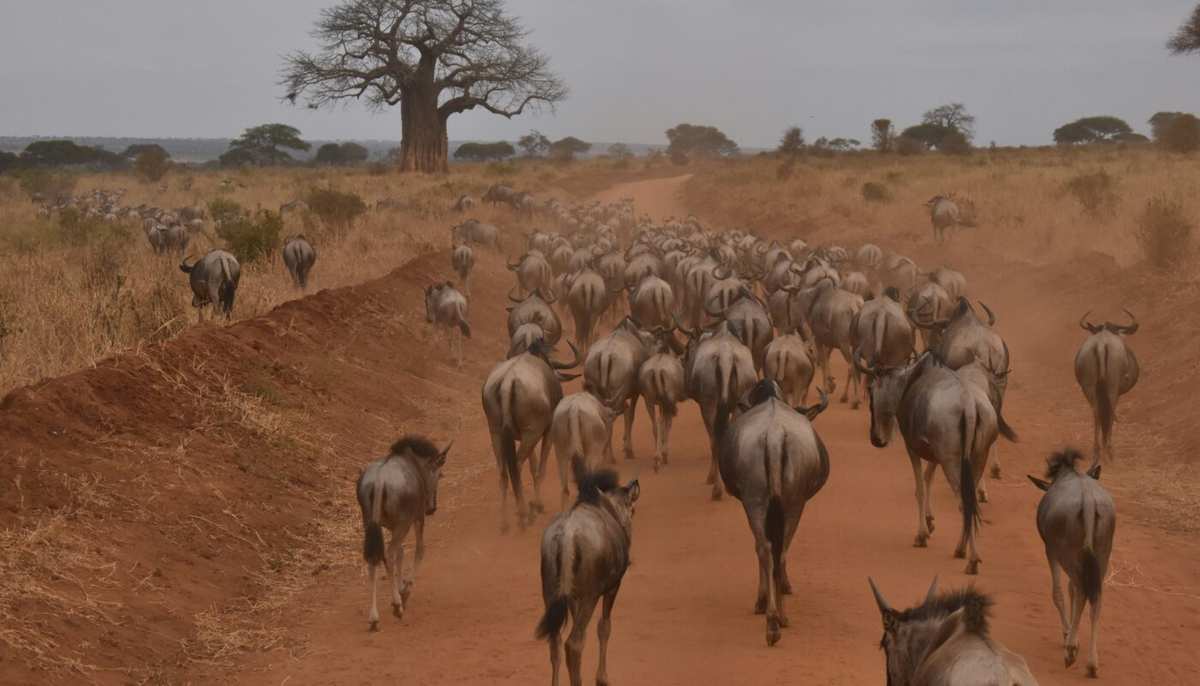
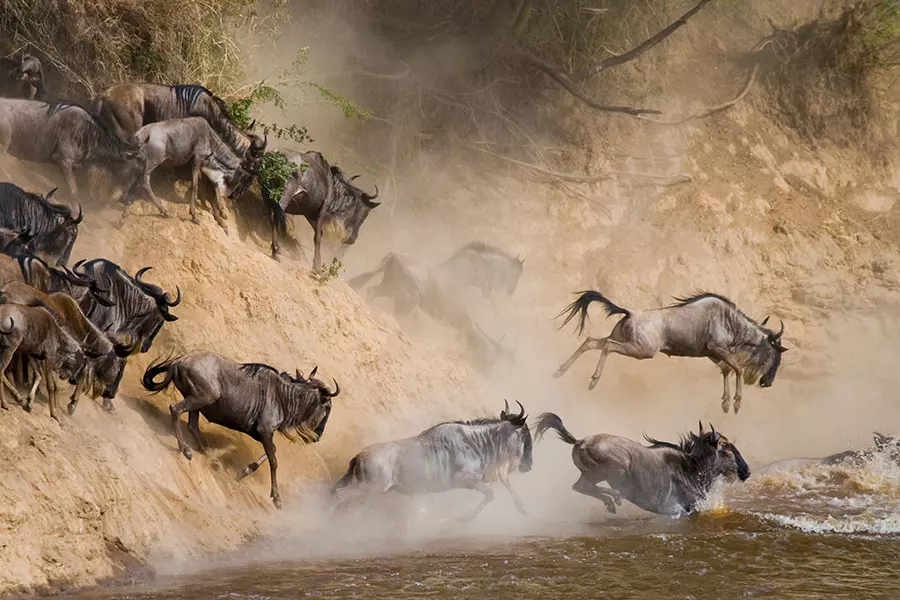
The Great Wildebeest Migration is one of Africa’s most spectacular wildlife events, involving approximately 1.5 million wildebeest, over 250,000 zebras, and hundreds of thousands of gazelles as they travel between Serengeti National Park and the Masai Mara National Reserve in search of fresh grazing.
Important: The migration is driven by rainfall, so exact timing varies slightly from year to year.
| Month | Location | What to Expect |
|---|---|---|
| January | Southern Serengeti & Ndutu | Herds gather on lush plains. Excellent predator sightings. |
| February | Ndutu & Southern Serengeti | Peak calving season. Around 8,000 calves may be born each day. Lions, cheetahs, hyenas, and leopards are highly active. |
| March | Southern to Central Serengeti | Calves begin strengthening. Herds gradually move northwest. |
| April | Central Serengeti | Green season continues. Long columns of migrating wildebeest. Fewer tourists. |
| May | Western Corridor | Large herds move toward the western Serengeti. Dramatic migration scenes. |
| June | Western Corridor | First river crossings at the Grumeti River. Crocodiles become a major threat. |
| July | Northern Serengeti | Herds approach the Mara River. River crossings begin. |
| August | Northern Serengeti & Masai Mara | Peak Mara River crossings. One of the best months for safari. |
| September | Masai Mara | Herds spread across the Mara. Superb game viewing and predator action. |
| October | Masai Mara & Northern Serengeti | Many animals begin returning south after seasonal rains. |
| November | Eastern & Central Serengeti | Migration heads back through eastern Serengeti following fresh grass. |
| December | Southern Serengeti & Ndutu | Herds arrive back on the southern plains, completing the annual cycle. |
Migration Route

Best Time Based on Your Interests
- Calving Season: January–March
- Predator Action: February–March
- Grumeti River Crossings: June
- Mara River Crossings: July–September
- Best Overall Safari: August–October
- Photography: January–March and July–September
- Fewer Crowds: April, May, and November
Month-by-Month Highlights
January–March: Calving Season
- Located mainly in the Ndutu area and southern Serengeti.
- Thousands of newborn calves attract lions, cheetahs, leopards, hyenas, and jackals.
- Excellent opportunities for wildlife photography.
April–June: Journey North
- Herds travel through central and western Serengeti.
- Massive migration columns stretch for kilometers.
- Grumeti River crossings occur in June.
July–October: Mara River Crossings
- Perhaps the migration’s most famous stage.
- Thousands of wildebeest leap into the crocodile-filled Mara River.
- Exceptional predator sightings in both northern Serengeti and Masai Mara.
November–December: Return South
- Short rains trigger the journey back toward the southern Serengeti.
- Herds disperse across fresh grazing before calving begins again.
Where to Stay for Each Season
- January–March: Ndutu, Southern Serengeti
- April–May: Central Serengeti
- June: Western Serengeti
- July–October: Northern Serengeti or Masai Mara
- November–December: Eastern and Southern Serengeti
Wildlife You’ll See
Besides the enormous wildebeest herds, you can expect to see:
- Lions
- Leopards
- Cheetahs
- Spotted hyenas
- African wild dogs (occasionally)
- Nile crocodiles
- Elephants
- Buffaloes
- Giraffes
- Zebras
- Thomson’s gazelles
- Grant’s gazelles
- Topi
- Elands
- Hippos
The Great Wildebeest Migration is a year-round phenomenon rather than a single event. Every month offers a different experience, from dramatic calving scenes in southern Serengeti to thrilling river crossings in the north, making it possible to plan an unforgettable safari at any time of the year.