Schengen Visa Guide by Adeli Kenya Safaris
Learn about countries that issue Visa, Fees, Requirements, Application Process and FAQs
Complete Schengen Visa guide by Adeli Kenya Safaris covering all 29 Schengen countries, visa fees, requirements, 90/180-day rule, documents, application process, processing times and FAQs.
Planning an outbound holiday tour, business trip, family visit or short stay in Europe? A Schengen visa may allow eligible travellers to visit up to 29 European countries under one short-stay visa, subject to the conditions and validity of the visa issued.
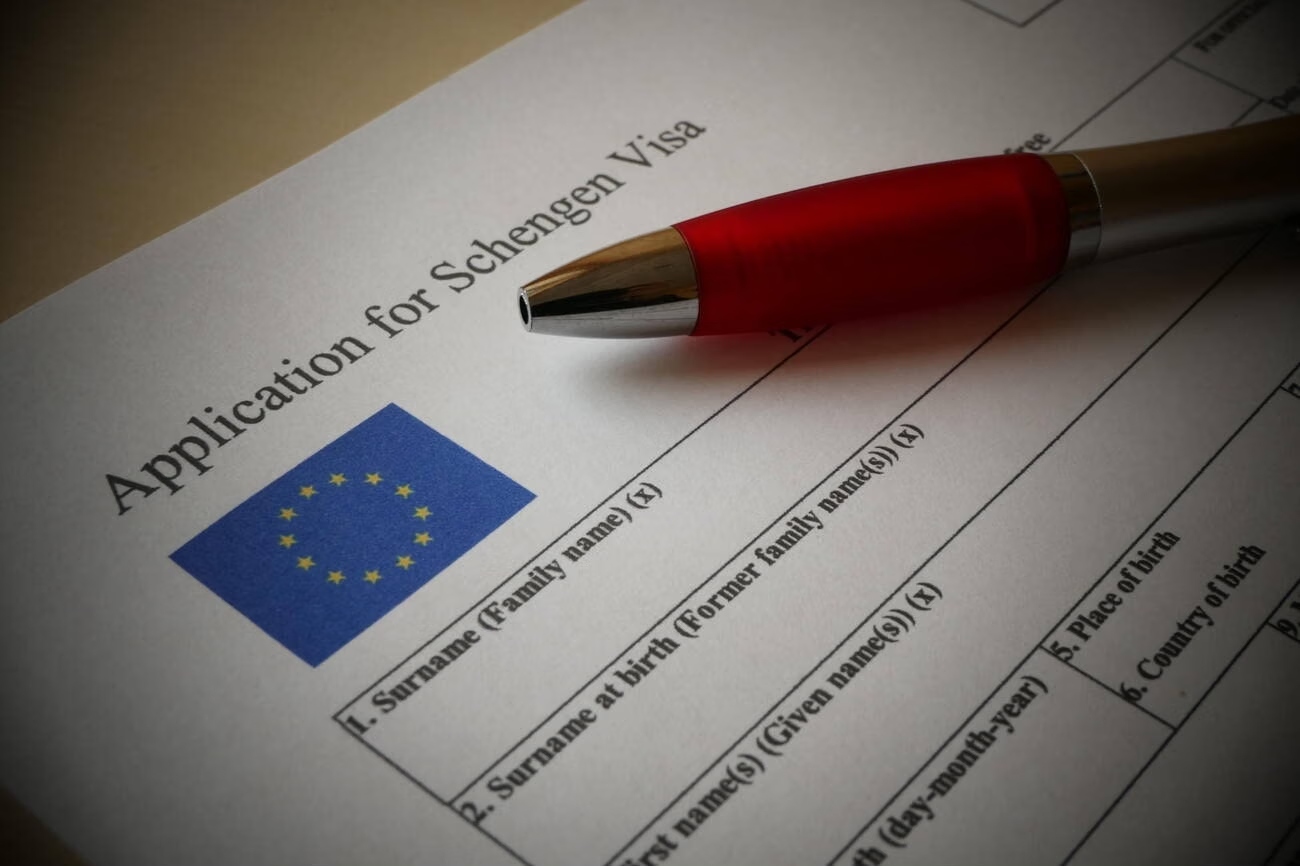
This detailed guide explains what a Schengen visa is, which countries use it, current visa fees, general requirements, where to apply, how long processing may take and the mistakes applicants should avoid.
At Adeli Kenya Safaris, we understand that international travel planning often involves more than booking a flight or accommodation. Visa requirements can be an important part of preparing for a trip, and applicants should always verify the latest requirements directly with the relevant embassy, consulate or official visa application centre before applying.
Important: Visa rules, fees, appointment procedures, required documents, processing times and country-specific requirements may change. The information below is intended as a general guide and does not guarantee visa approval.
What Is a Schengen Visa?
A Schengen visa is an authorisation issued for short stays in the Schengen Area. It may permit eligible travellers to enter and travel within the Schengen Area for purposes such as:
- Tourism and holidays
- Visiting family or friends
- Business travel
- Attending conferences or events
- Cultural or sporting events
- Certain short study or training activities
- Other eligible short-term visits
The standard short-stay rule is generally up to 90 days in any 180-day period. This is not necessarily the same as receiving an automatic 90-day stay: the visa issued may allow a shorter period, fewer days or a different number of entries.
The Schengen visa does not generally cover long-term residence, employment or stays exceeding 90 days. These are normally governed by the national immigration rules of the relevant country.
How Many Countries Use the Schengen Visa?

As of 2026, the Schengen Area consists of 29 countries. These include 25 EU Member States and four non-EU countries.
The Schengen Area includes:
Austria
Austria is a popular destination for city breaks, cultural tourism and Alpine holidays.
Belgium
Belgium attracts visitors for its historic cities, museums, architecture, cuisine and international institutions.
Bulgaria
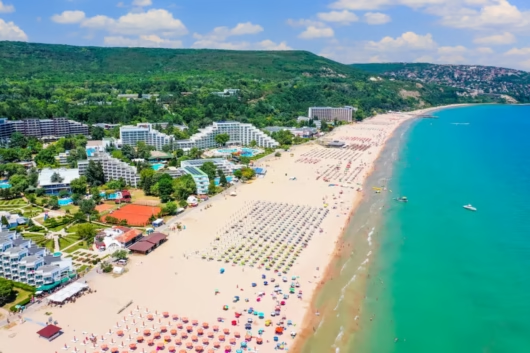
Bulgaria is a full Schengen Area member and uses Schengen visa rules for eligible short-stay travellers.
Croatia
Croatia is part of the Schengen Area and is known for its Adriatic coastline, islands, national parks and historic towns.
Czechia
Czechia, including the capital city of Prague, is a popular destination for culture, history and European city breaks.
Denmark
Denmark is part of the Schengen Area and may be included in wider Scandinavian or European travel itineraries.
Estonia
Estonia is one of the Baltic countries in the Schengen Area.
Finland
Finland is a Schengen destination popular for nature, winter travel and visits to Helsinki and Lapland.
France
France is one of Europe’s most popular destinations and a major Schengen visa destination for tourism, business and family visits.
Germany
Germany is a major destination for business, tourism, trade fairs, family visits and cultural travel.
Greece
Greece is well known for its islands, beaches, ancient history and Mediterranean tourism.
Hungary
Hungary is part of the Schengen Area and attracts visitors to Budapest and other historic destinations.
Italy
Italy is a popular destination for history, food, fashion, art and Mediterranean travel.
Latvia
Latvia is one of the Baltic countries within the Schengen Area.
Liechtenstein
Liechtenstein is a non-EU country that forms part of the Schengen Area.
Lithuania
Lithuania is another Baltic country participating in the Schengen Area.
Luxembourg
Luxembourg is a small European country and a member of the Schengen Area.
Malta
Malta is part of the Schengen Area and is a popular Mediterranean destination.
Netherlands
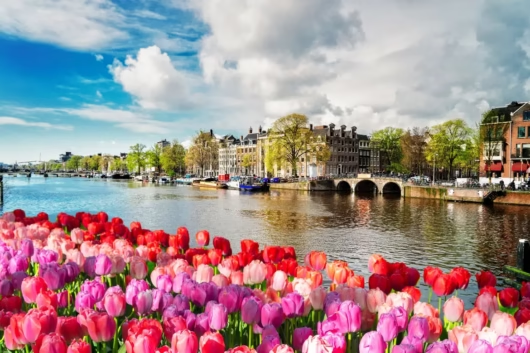
The Netherlands is a major European tourism and business destination.
Norway
Norway is not an EU Member State but is part of the Schengen Area.
Poland
Poland is a Schengen country located in Central Europe.
Portugal
Portugal is a popular destination for beaches, culture, cities and coastal travel.
Romania
Romania is a full member of the Schengen Area and applies Schengen visa rules for relevant short stays.
Slovakia
Slovakia is part of the Schengen Area and is located in Central Europe.
Slovenia
Slovenia is a Schengen country known for Alpine landscapes, lakes and access to the Adriatic region.
Spain
Spain is a major destination for holidays, family visits, culture and business travel.
Sweden
Sweden is a Schengen country and part of the Nordic region.
Switzerland
Switzerland is not an EU Member State but participates in the Schengen Area.
Iceland
Iceland is a non-EU Schengen country and is known for dramatic natural landscapes, geothermal attractions and the Northern Lights.
Full list of the 29 countries: Austria, Belgium, Bulgaria, Croatia, Czechia, Denmark, Estonia, Finland, France, Germany, Greece, Hungary, Italy, Latvia, Liechtenstein, Lithuania, Luxembourg, Malta, Netherlands, Norway, Poland, Portugal, Romania, Slovakia, Slovenia, Spain, Sweden, Switzerland and Iceland.
Which European Countries Do Not Issue Schengen Visas?
Two EU countries are particularly important to understand:
- Cyprus is not currently issuing Schengen visas under the normal Schengen visa system.
- Ireland is not part of the Schengen Area and operates its own national visa rules.
Therefore, travellers should not assume that a standard Schengen visa automatically provides the same entry rights for Cyprus or Ireland. National entry requirements must be checked separately.
A valid visa or residence permit issued by a Schengen country may have relevance for travel to Cyprus in certain circumstances, but travellers should always confirm the applicable rules before travelling.
Does One Schengen Visa Allow You to Visit All 29 Countries?
A Schengen visa is generally valid throughout the Schengen Area, but travellers must check the specific conditions printed on their visa.
The visa sticker may specify:
- The countries or territories for which it is valid
- The number of entries permitted
- The period during which it can be used
- The number of days authorised
- Other relevant conditions
A visa does not mean that the holder has an unrestricted right to enter every country or remain for an unlimited period.
Border authorities may still verify that travellers meet the conditions of entry. Travellers should carry relevant supporting information, particularly where appropriate to their journey.
How Long Can You Stay in Europe on a Schengen Visa?
The standard short-stay framework allows stays of up to 90 days within any 180-day period.
This is commonly described as the 90/180-day rule.
For example, time spent in one Schengen country may count towards the total time spent in the Schengen Area. Travellers should therefore carefully monitor their previous and planned stays.
Your actual permitted stay is determined by the visa and applicable entry conditions. Never assume that you have automatically been granted the maximum possible 90 days.
Current Schengen Visa Fees
Under the standard fee structure, the main Schengen visa fee is:
| Applicant category | Standard visa fee |
|---|---|
| Adults | €90 |
| Children aged 6 to under 12 | €45 |
| Children under 6 | Generally exempt from the standard visa fee |
Special reduced fees or other arrangements may apply to nationals of certain countries under specific visa facilitation agreements.
Some categories of applicants may also qualify for a fee waiver, depending on the applicable rules and circumstances. These may include certain students, researchers and other qualifying groups.
An additional service fee may apply where a visa application centre or authorised external service provider is used.
Visa fees are generally payable when the application is submitted and are not automatically refunded simply because a visa application is refused. Applicants should check the current fee and payment method with the embassy, consulate or authorised visa application centre handling their application.
Schengen Visa Requirements
The exact requirements depend on the applicant’s nationality, country of residence, travel purpose and destination. However, applicants commonly need the following:
1. A Valid Passport
Applicants generally need a valid passport or travel document.
The European Commission states that the passport’s expiry date should generally be at least three months after the intended departure from the Schengen Area, subject to the applicable rules.
Passport validity and document requirements should be checked carefully before applying.
2. Completed Visa Application Form
Applicants are generally required to complete the appropriate visa application form accurately.
Incorrect, incomplete or inconsistent information can create delays or raise questions about the application.
3. Recent Passport Photograph
A recent photograph meeting the required specifications is generally required.
Applicants should use the specifications provided by the relevant embassy, consulate or authorised visa application centre.
4. Travel Medical Insurance
Travel medical insurance is generally required for a Schengen visa application.
The insurance must meet the applicable requirements for:
- Emergency medical care
- Hospital treatment
- Medical repatriation
- Repatriation in the event of death
The exact insurance requirements should be verified for the specific application.
5. Proof of the Purpose of Travel
Applicants may need to demonstrate why they are travelling.
Depending on the purpose of the trip, this may include documents such as:
- Tour itinerary
- Invitation letter
- Business invitation
- Conference registration
- Event confirmation
- Evidence relating to family visits
- Other documents supporting the stated purpose of travel
6. Proof of Accommodation
Applicants may need to provide evidence of where they intend to stay.
Depending on the trip, this could include:
- Hotel reservations
- Accommodation bookings
- An invitation from a host
- Other acceptable evidence of accommodation
Applicants should always check what form of evidence the relevant visa authority accepts.
7. Proof of Financial Means
Applicants may need to demonstrate that they have sufficient financial resources to cover their travel and stay.
Documents may include, depending on the individual case:
- Recent bank statements
- Employment and income evidence
- Sponsorship documents
- Other financial documentation
There is no single financial amount that should be assumed to apply to every applicant or destination. Requirements can differ according to the Schengen country, trip duration and circumstances.
8. Evidence of Intention to Return
Applicants may be required to demonstrate ties to their country of residence and evidence that they intend to leave the Schengen Area at the end of their authorised visit.
Depending on individual circumstances, relevant documents may include evidence relating to:
- Employment
- Business ownership
- Studies
- Family responsibilities
- Property or residence
- Other lawful commitments and personal circumstances
9. Biometrics
Applicants may be required to provide biometric information, including fingerprints, when submitting a visa application.
Some exemptions may apply in particular circumstances.
10. Additional Country-Specific Documents
The general document list is not always the complete document list.
Embassies and consulates may request additional documents based on:
- The applicant’s nationality
- The country where the application is submitted
- The purpose of travel
- Employment status
- Age
- Family circumstances
- Previous travel history
- Individual assessment of the application
For this reason, the document checklist issued by the relevant official visa authority should always take priority over a general online checklist.
Which Country Should You Apply To?
One of the most important parts of the Schengen visa process is applying to the correct country.
If You Are Visiting One Schengen Country
Apply to the Schengen country that is your main destination.
If You Are Visiting Several Countries
In general, you should apply to the country where you will spend the main part of your trip, usually the country of the longest stay.
If You Are Spending an Equal Amount of Time in Multiple Countries
The rules may require you to apply through the country of your first entry, depending on the circumstances of your itinerary and the applicable rules.
Applicants should not select a visa country simply because they believe one embassy is easier or more likely to issue a visa. Applications should be submitted according to the actual purpose and itinerary of the trip.
Submitting false, misleading or inconsistent travel plans can lead to serious problems, including refusal of the application. Official EU guidance emphasises the importance of applying to the country that is genuinely the main destination or where the traveller plans to spend the most time.
How to Apply for a Schengen Visa
The application process commonly involves the following steps.
Step 1: Confirm Whether You Need a Visa
Visa requirements depend largely on nationality, travel document and individual circumstances.
Some passport holders may be exempt from the requirement to obtain a short-stay Schengen visa.
Step 2: Identify the Correct Schengen Country
Determine which country is your main destination based on your genuine travel plans.
Step 3: Check the Official Requirements
Visit the official embassy, consulate or authorised visa application centre website responsible for processing your application.
Step 4: Prepare the Required Documents
Prepare the visa application and supporting documentation carefully.
Documents should be genuine, accurate and consistent with your intended travel.
Step 5: Book an Appointment
Many applications require an appointment before documents and biometrics can be submitted.
Step 6: Attend the Visa Appointment
Applicants may need to submit:
- Application form
- Passport
- Photographs
- Supporting documents
- Biometrics
- Visa fee
Step 7: Wait for Processing
The European Commission states that the normal processing time is generally 15 days, although processing may be extended to up to 45 days where additional examination or documentation is required.
Applicants should therefore avoid leaving their application until the last minute.
Step 8: Collect Your Passport and Check the Visa
If a visa is issued, carefully check:
- Name spelling
- Passport number
- Validity dates
- Number of entries
- Number of authorised days
- Territorial validity
Report any obvious administrative errors immediately to the authority that issued the visa.
When Should You Apply for a Schengen Visa?
Applications can generally be submitted up to six months before the intended trip, while official guidance recommends applying at least 15 calendar days before travel.
However, applying much earlier may be sensible where:
- Appointments are difficult to obtain
- Travel is during a busy season
- Your itinerary is complex
- Additional documents may be requested
- You need your passport returned before another trip
Do not assume that an early application automatically guarantees a faster decision or visa approval.
How Long Does a Schengen Visa Take to Process?
The normal processing time is generally around 15 days after a complete application is lodged.
However, a longer period may apply. Official guidance states that processing can be extended to up to 45 days when a more detailed examination or additional documentation is required.
Applicants should therefore avoid purchasing non-refundable travel arrangements solely on the assumption that a visa will be issued by a particular date.
Does a Schengen Visa Guarantee Entry into Europe?
No.
A visa authorises the holder to travel to a Schengen external border and seek entry according to the conditions of the visa. It does not remove the authority of border officials to carry out the applicable entry checks.
Travellers should ensure that they can explain their travel plans and, where relevant, provide supporting documentation.
Can You Work on a Schengen Tourist Visa?
Generally, a short-stay Schengen visa is not a general work permit.
Travellers intending to work, live, study for a longer period or remain in a Schengen country for more than 90 days should investigate the relevant national immigration, work or residence permit requirements.
Long-stay visas and residence procedures are generally governed by the national rules of the relevant country.
What Is the Difference Between a Single-Entry and Multiple-Entry Schengen Visa?
Single-Entry Visa
A single-entry visa generally permits one entry into the Schengen Area within the conditions and validity period shown on the visa.
Multiple-Entry Visa
A multiple-entry visa may permit more than one entry, subject to the visa’s validity, number of authorised days and other conditions.
Always check the visa sticker carefully. A multiple-entry visa does not automatically provide unlimited stays or remove the 90/180-day rule.
Common Reasons a Schengen Visa May Be Refused
Visa decisions are made by the competent authorities based on individual circumstances and the documents submitted.
Possible reasons for refusal can include issues relating to:
- Incomplete documentation
- Insufficient or inconsistent evidence
- Questions about the purpose of travel
- Insufficient evidence of financial means
- Concerns about the reliability of information
- Lack of adequate travel medical insurance
- Concerns regarding intention to leave after the visit
- Travel document issues
- False or fraudulent documentation
- Other grounds under the applicable visa rules
If an application is refused, the applicant should receive information about the reason for refusal and the available appeal procedure.
Important Mistakes to Avoid
Providing False Documents
Never submit fake bookings, fraudulent bank statements, false employment letters or invented invitations.
False documentation can lead to refusal and potentially other serious consequences.
Applying Through the Wrong Country
Apply according to your genuine main destination and travel itinerary.
Giving Inconsistent Information
Your application form, itinerary, bank statements, employment evidence and other documents should be accurate and consistent.
Applying Too Late
Appointments and processing times can cause delays.
Assuming Visa Approval Is Guaranteed
No travel consultant, tour operator, agent or third party can guarantee that a visa will be issued.
Ignoring the Visa Sticker
If your visa is approved, read the conditions carefully before travelling.
Travel Insurance for a Schengen Visa
Travel medical insurance is an important part of many Schengen visa applications.
Before purchasing insurance, check that the policy meets the requirements of the country processing your application. The insurance should cover the relevant risks required under Schengen visa rules, including emergency medical treatment, hospitalisation and repatriation.
Applicants should ensure that the insurance is valid for the required geographic area and dates of travel.
Travel to Europe Is Changing: Entry/Exit System
The European Entry/Exit System (EES) is now fully operational across the relevant external border crossing points, replacing traditional passport stamping with digital records for short stays covered by the system.
Travellers should allow additional time for border formalities where necessary and follow instructions from the relevant border authorities.
How Adeli Kenya Safaris Can Help
Adeli Kenya Safaris can assist clients with general travel planning and information relating to visa application preparation, where such assistance is offered.
However:
- Adeli Kenya Safaris is not an embassy or immigration authority.
- Visa decisions are made solely by the relevant embassy, consulate or authorised government authority.
- No visa approval can be guaranteed.
- Applicants remain responsible for the accuracy and completeness of the information and documents submitted in their application.
- Final requirements may differ according to nationality, destination and individual circumstances.
Always verify current requirements, fees, appointment availability and documentation directly with the official visa authority responsible for your application before making final travel arrangements.
Frequently Asked Questions About Schengen Visas
What is a Schengen visa?
A Schengen visa is a short-stay travel authorisation issued by a Schengen country that may allow eligible travellers to visit the Schengen Area for up to 90 days within a 180-day period, subject to the conditions of the visa.
How many countries use the Schengen visa?
As of 2026, there are 29 countries in the Schengen Area.
Which countries are in the Schengen Area?
Austria, Belgium, Bulgaria, Croatia, Czechia, Denmark, Estonia, Finland, France, Germany, Greece, Hungary, Iceland, Italy, Latvia, Liechtenstein, Lithuania, Luxembourg, Malta, Netherlands, Norway, Poland, Portugal, Romania, Slovakia, Slovenia, Spain, Sweden and Switzerland.
Is the United Kingdom part of Schengen?
No. The United Kingdom is not part of the Schengen Area and has its own immigration and visa requirements.
Is Ireland part of Schengen?
No. Ireland is not part of the Schengen Area and applies its own national visa rules.
Is Cyprus part of the Schengen Area?
Cyprus is participating in the Schengen cooperation process but does not currently operate as a normal Schengen visa-issuing country. Travellers should check Cyprus’s national entry requirements.
How much does a Schengen visa cost?
The standard visa fee is generally €90 for adults and €45 for children aged 6 to under 12, subject to applicable exemptions, reduced fees and additional service charges.
Do children pay for a Schengen visa?
Children under six are generally exempt from the standard visa fee. Children aged six to under 12 generally pay €45, subject to applicable rules and exemptions.
How long can I stay on a Schengen visa?
The standard short-stay limit is generally up to 90 days within any 180-day period, but the exact authorised stay depends on the visa issued.
Can I visit more than one country with a Schengen visa?
Generally, yes, if your visa is valid for the relevant countries and you comply with its conditions and the Schengen rules.
Which embassy should I apply to?
You should generally apply to the country that is your genuine main destination or where you will spend the longest part of your trip.
How long does a Schengen visa take?
The normal processing time is generally around 15 days, although processing can take up to 45 days in cases requiring additional examination or documents.
Can I apply six months before travelling?
Applications can generally be submitted up to six months before the intended trip.
Is travel insurance required?
Travel medical insurance is generally required for Schengen visa applications and must meet the applicable requirements.
Do I need to provide bank statements?
Evidence of sufficient financial means may be required. The exact documentation depends on the country and the applicant’s circumstances.
Can I work with a Schengen visa?
A standard short-stay Schengen visa is not generally a work permit. Employment and long-term residence require the appropriate national immigration permissions.
Is a return flight booking required?
The relevant visa authority may require evidence supporting your travel plans and intention to leave. You should check the official checklist for your specific destination and application.
Can I get a refund if my visa is refused?
The standard visa fee is generally not refundable merely because the application is refused, subject to the applicable rules.
Can a visa be refused even if I have all the documents?
Yes. Providing documents does not guarantee approval. Visa applications are assessed by the competent authorities based on the relevant rules and the circumstances of each application.
Does a Schengen visa guarantee entry?
No. Border authorities can still carry out applicable entry checks when you arrive.
Can Adeli Kenya Safaris guarantee my visa?
No. Visa approval is solely the decision of the relevant embassy, consulate or authorised immigration authority.
What should I do before applying?
Check the latest official requirements, prepare genuine documents, apply to the correct destination country, allow sufficient processing time and make sure your information is accurate and consistent.
Final Advice for Schengen Visa Applicants
A successful Schengen visa application begins with accurate planning.
Make sure you:
- Understand the genuine purpose of your trip
- Apply through the correct country
- Check the latest official requirements
- Prepare complete and genuine documents
- Demonstrate your travel plans clearly
- Show evidence of sufficient financial means where required
- Obtain compliant travel medical insurance
- Apply early enough to allow for appointments and processing
- Carefully check your visa if it is issued
- Never assume that a visa guarantees entry or a specific number of days
Visa requirements and procedures can change. Before submitting an application, always confirm the latest information directly with the embassy, consulate or authorised visa application centre responsible for your destination.
For general travel planning and guidance, contact Adeli Kenya Safaris and let our team help you prepare for your next journey.
Europe Holiday tour packages from Kenya with Adeli Kenya Safaris

Discover Europe Holiday Tour Packages from Kenya with Adeli Kenya Safaris, featuring unforgettable holidays to Greece, Spain, Turkey, Italy, France, England, the United Kingdom, Switzerland, Denmark and the Faroe Islands. Explore Croatia, Albania, Austria, Germany, Iceland, Ireland, Portugal, Norway, Sweden and more, including ANZAC Day tours, for memorable European travel experiences from Kenya.
-

Turkey Europe Holiday tour Packages from Nairobi Kenya3 Products
-
Italy Europe Holiday tour Packages from Nairobi Kenya2 Products
-
Spain Europe Holiday tour Packages from Nairobi Kenya2 Products
-
Greece Europe Holiday tour Packages from Nairobi Kenya1 Product
-
Czech Republic Europe holiday tour packages from Nairobi Kenya1 Product
-
Norway Europe holiday tour packages from Nairobi Kenya1 Product
-
Greenland Europe holiday tour packages from Nairobi Kenya1 Product
-
Cyprus Europe holiday tour packages from Nairobi Kenya1 Product
-
Switzerland Europe holiday tour packages from Nairobi Kenya1 Product
-
Netherlands Europe holiday tour packages from Nairobi Kenya1 Product
-
Sweden Europe holiday tour packages from Nairobi Kenya1 Product
-
Hungary Europe holiday tour packages from Nairobi Kenya1 Product
-
Poland Europe holiday tour packages from Nairobi Kenya1 Product
-
United Kingdom Europe holiday tour packages from Nairobi Kenya1 Product
-
Denmark Europe holiday tour packages from Nairobi Kenya1 Product
-
Iceland Europe holiday tour packages from Nairobi Kenya1 Product
-
Portugal Europe holiday tour packages from Nairobi Kenya1 Product
-
Wales Europe holiday tour packages from Nairobi Kenya1 Product
-
England Europe holiday tour packages from Nairobi Kenya1 Product
-
Ireland Europe holiday tour packages from Nairobi Kenya1 Product
-
Montenegro Europe holiday tour packages from Nairobi Kenya1 Product
-
Germany Europe holiday tour packages from Nairobi Kenya1 Product
-
France Europe Holiday tour Packages from Nairobi Kenya1 Product
-
Faroe Islands Europe Holiday tour Packages from Nairobi Kenya1 Product
-
Croatia Europe Holiday tour Packages from Nairobi Kenya1 Product
-
ANZAC Day Europe holiday tour packages from Nairobi Kenya1 Product
-
Estonia Europe holiday tour packages from Nairobi Kenya1 Product
-
Scotland Europe holiday packages1 Product
-
Albania Europe holiday tour packages from Nairobi Kenya1 Product
-
Latvia Europe holiday tour packages from Nairobi Kenya1 Product
-
Serbia Europe holiday tour packages from Nairobi Kenya1 Product
-
Austria Europe holiday tour packages from Nairobi Kenya1 Product
-
Finland Europe holiday tour packages from Nairobi Kenya1 Product
-
Lithuania Europe holiday tour packages from Nairobi Kenya1 Product
-
Slovenia Europe holiday tour packages from Nairobi Kenya1 Product
-
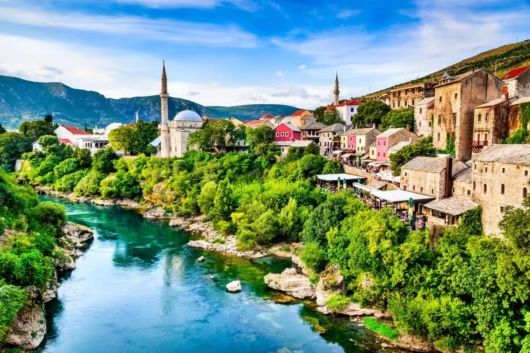
Bosnia & Herzegovina Europe holiday tour packages from Nairobi Kenya1 Product
-
Malta Europe holiday tour packages from Nairobi Kenya1 Product
-
Bulgaria Europe holiday tour packages from Nairobi Kenya1 Product
-
Romania Europe holiday tour packages from Nairobi Kenya1 Product
























About Adeli Kenya Safaris Best sustainable Africa safari tour company in Kenya
Adeli Kenya Safaris is an East African DMC, sustainable safari tour operator & travel agency in Westlands, Nairobi Kenya that specializes in Nairobi excursions, Kenya safari tours, Kenya safari and beach holidays, combined Kenya & Tanzania safaris, Tanzania safari tours, Zanzibar beach vacations, Uganda and Rwanda gorilla trekking tours, Mount Kenya and Mount Kilimanjaro climbing adventures, outbound holiday packages, and luxury cruise holidays.
Immerse and indulge your body, mind and soul in immersive Africa safari tour packages and safari holiday experiences that will awaken & captivate your 7 senses by what you see, feel, hear, touch, smell and taste, leaving you speechless, restored & inspired.
Your dream safari / holiday is just a call or email away. Contact Adeli Kenya Safaris today. Tel: +254720564538 | WhatsApp: +254720564538 | Email: info@adelikenyasafaris.com
Explore our travel quotes, travel blog, FAQs, safari guides and vlogs for expert travel tips, destination inspiration, and the latest African travel news.