Best wildlife parks, reserves, private wildlife conservations, beaches & other safari tour destinations in Kenya

They say, “You can’t please everyone.” Well, “they” surely haven’t been to the astonishing national parks, Wildlife conservancies & sun-kissed white sandy beaches of Kenya- for these parks truly offer something for everyone.
Kenya is synonymous with the word “safari.” Perhaps no other place on the planet conjures such a spirit of adventure and romance. The diversity of things to do dazzles all who visit, and viewing the country’s abundant wildlife tops the list.
Kenya offers a wealth of safari experiences catering to all interests and budgets, making it a top destination for wildlife enthusiasts and nature lovers alike. Whether you’re seeking the thrill of the savannah or the tranquility of Kenya’s wilderness, a safari in Kenya promises unforgettable moments and close encounters with Africa’s iconic wildlife.
Beyond the world-famous Kenya wildlife safari parks and private wildlife conservancies lies a trove of coastal treasures. You can snorkel and dive fish-rich coral reefs, relax on pearly beaches, experience the melting pot of cultures and cuisines in Mombasa, Malindi, Watamu, Kilifi, Diani & Lamu and explore tropical islands steeped in Swahili history.
To experience the romance of Kenya‘s colorful colonial history captured in the film Out Of Africa, head to Nairobi. This bustling capital is the gateway to one of the world’s most evocative and exciting travel destinations.
Best Kenya Luxury safaris from Nairobi, Mombasa, Diani beach & Malindi/Watamu with Adeli Kenya Safaris
Book the best African safari tour in Kenya and explore Kenya’s iconic wildlife parks where conservation meets breathtaking safaris. Witness the Great Migration, the Big Five, the Big cats and diverse natural habitats.
Adeli Kenya Safaris offers the best Africa Kenya safari Tour Packages visiting the best wildlife parks, reserves, wildlife conservancies in Kenya & beaches like: Nairobi National Park, Maasai Mara National Reserve for the Great Wildebeest Migration, Amboseli National Park famous for large herds of free-ranging elephants and views of Mt. Kilimanjaro, Lake Nakuru National Park, Samburu National Reserve, Ol Pejeta Conservancy, Tsavo West & Tsavo East National Park, Aberdare National Park, Meru National Park, Kakamega Forest, Lake Bogoria, Diani beach, Mombasa beach, Malindi beach, Watamu beach & Lamu Island.
Whether you’re dreaming of a thrilling Maasai Mara Safari, a luxurious escape with our Luxury Kenya Safaris, or an intimate Wildlife Safari Kenya, we offer tailored experiences to suit every traveler.
Join us on family friendly adventure tours and holiday experiences, curated specially for you and with you in mind. Let’s responsibly explore & preserve the wild places and cultures we treasure for generations to come. Experience wildebeest migration, big five, big cats, small 5, ugly 5, special 5 of Samburu, breathtaking wildlife parks, private wildlife conservancies, natural wonders, awe-inspiring, landscapes, beautiful beaches, magical sunsets & sunrises, prolific wildlife & birdlife, indigenous cultures, lakes, mountains, farms, historical sites, religious sites, sports sites. UNESCO World Heritage Sites e.t.c as you stay in the best hotels, safari lodges, tented camps & homestays.
Your dream safari in Kenya & East Africa is just a call or email away. Contact Adeli Kenya Safaris today. Tel: +254720564538 | WhatsApp: +254720564538 | Email: info@adelikenyasafaris.com
Best Kenya safari destinations – wildlife parks, game reserves, private conservancies, mountains, lakes, monuments e.t.c.
Book the best African safari tour in Kenya and explore Kenya’s iconic wildlife parks: Masai Mara National Reserve, Amboseli National Park, Tsavo, Ol Pejeta Conservancy, Samburu National Reserve, Lake Nakuru National Park and more where conservation meets breathtaking safaris.
Witness the Great Migration, the Big Five, the Big cats and diverse natural habitats.
Plan your unforgettable African adventure today with Adeli Kenya Safaris explore our natural wonders.
Nairobi City – the safari capital of Africa:
Kenya‘s capital and largest city, Nairobi is legendary for its colorful colonial history. It was once the capital of British East Africa, luring settlers who came here to stake their fortune in the coffee and tea industries. Today, you can explore the city’s famous historic sites, as well as some excellent wildlife-related attractions.
The Nairobi National Museum is a great one-stop spot to see exhibits on Kenya‘s history, nature, culture, and contemporary art. Green thumbs will also enjoy the botanic gardens on the grounds. Another popular tourist attraction is the Karen Blixen Museum, the restored residence of the famous Danish author of the book Out of Africa, also known by her pen name, Isak Dinesen. To see wildlife without venturing far from the city center, visit Nairobi National Park, now a black rhino sanctuary and also home to a diversity of other African wildlife.
Nairobi National Park – world’s only wildlife park in a city and home to the 4 of the Big five of Africa
- Highlights: Located just outside Kenya’s capital city, Nairobi National Park offers a unique opportunity to see wildlife with a city skyline in the background. The park is home to lions, giraffes, rhinos, and a variety of bird species.
- Activities: Game drives, visiting the David Sheldrick Wildlife Trust and Giraffe Centre.
A mere 15-minute drive from the clamor of Kenya‘s capital, you can gaze at a snoozing pride of lions or a graceful giraffe strutting through the golden grass at Nairobi National Park.
Visiting this wildlife-rich park is one of the top things to do if you’re staying in Nairobi, and it makes a rewarding day trip – especially if you can’t make it to one of the larger game reserves. All the classic safari stars are here, including buffalo, leopards, zebras, wildebeest, hippos, elephants, and cheetah, and you can also see some of the planet’s most endangered species at the park’s rhino sanctuary.
The Nairobi Safari Walk provides a rewarding opportunity to spot wildlife on foot, and birders will be happy to know that more than 400 species of birds also inhabit the park, including the beautiful grey crowned crane.
While you’re here, be sure to stop by The David Sheldrick Elephant Orphanage. This famous wildlife sanctuary rescues and rehabilitates orphaned elephants and offers close-up encounters with these adorable animals. And no visit to the park would be complete without popping into the Giraffe Centre, near the famous Giraffe Manor hotel, where these long-necked beauties eat right out of your hands.
On your Nairobi excursion, the famous Carnivore Restaurant is a favorite for many. Check out other best restaurants in Nairobi Kenya.
Maasai Mara National Reserve – home of the Big 5 of Africa, Big cats, the Great Wildlife Migration, Maasai culture and so much more.
- Highlights: Famous for the Great Wildebeest Migration (July-October), the Maasai Mara is home to the Big Five (lion, leopard, elephant, buffalo, and rhino) and offers some of the best wildlife viewing in Africa.
- Activities: Game drives, hot air balloon safaris, cultural visits to Maasai villages.
Maasai Mara National Reserve (also “Masai Mara”) is one of the world’s most magnificent game reserves. Bordering Tanzania, the Mara is the northern extension of the Serengeti and forms a wildlife corridor between the two countries. It’s named after the statuesque, red-cloaked Maasai people who live in the park and graze their animals here as they have done for centuries. In their language, Mara means “mottled,” perhaps a reference to the play of light and shadow from the acacia trees and cloud-studded skies on the vast grasslands.
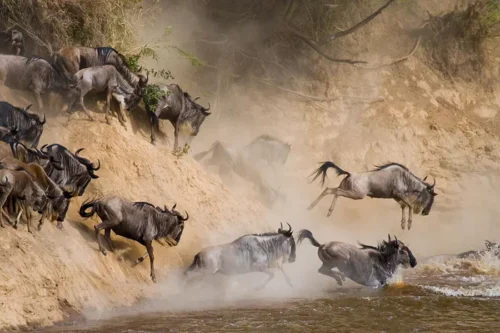
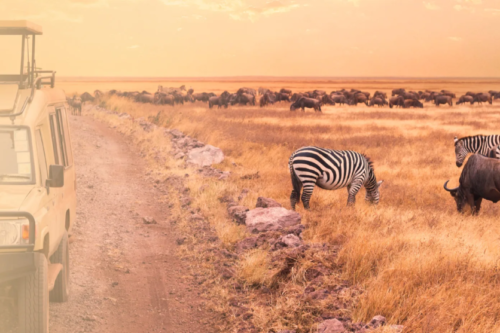
The park is famous for the Great Wildebeest Migration, when thousands of wildebeest, zebra, and Thomson’s gazelle travel to and from the Serengeti, from July through October. In the Mara River, throngs of hippos and crocodiles lurk. The park is also known for providing excellent predator sightings (check Big Cat Diary on BBC), thanks to its relatively large populations of Big Five: lion, cheetah, and leopard and many other flora & fauna.
Thanks to the park’s altitude, the weather here is mild and gentle year-round.
Amboseli National Park – large herds of elephants and beautiful views of Mount Kilimanjaro
- Highlights: Known for its large herds of elephants and stunning views of Mount Kilimanjaro. The park also hosts a variety of other wildlife, including lions, cheetahs, and giraffes.
- Activities: Game drives, bird watching, photography.
Crowned by Mount Kilimanjaro, Africa’s highest peak, Amboseli National Park is one of Kenya‘s most popular tourist parks. The name “Amboseli” comes from a Maasai word meaning “salty dust,” an apt description for the park’s parched conditions.
The reserve is one of the best places in Africa to view large herds of free-ranging elephants up close. Other wildlife commonly spotted in the park includes big cats, such as lion and cheetah, as well as giraffe, impala, eland, waterbuck, gazelle, and more than 600 species of birds.
Nature lovers can explore five different habitats here, ranging from the dried-up bed of Lake Amboseli, wetlands with sulfur springs, savannah, and woodlands. Look for the local Maasai people who live in the area around the park.
Tsavo East National Park and Tsavo West National Park -wild, scenic, rugged & teeming with wildlife
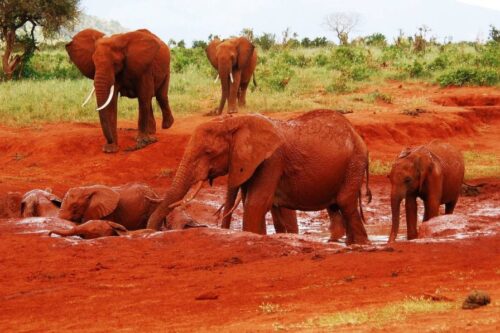
- Highlights: Together, these parks form one of the largest wildlife sanctuaries in the world. Tsavo East is known for its vast open plains and the Yatta Plateau, while Tsavo West features more varied landscapes, including volcanic hills, springs, and lava flows. Here you will also find ‘red elephants’.The “red elephants” of Tsavo National Park in Kenya are unique due to their distinctive reddish color, not because they are a different species. They appear red due to their frequent bathing in the park’s red volcanic soil, which is rich in iron oxide. While they are the same species as other elephants, the red dust from the soil adheres to their skin, giving them a reddish hue.
- Activities: Game drives, visiting Mzima Springs, bird watching, and exploring the Shetani Lava Flows.
Kenya‘s largest park, Tsavo, is sliced in two: Tsavo West National Park and Tsavo East National Park. Together these parks comprise four percent of the country’s total area and encompass rivers, waterfalls, savannah, volcanic hills, a massive lava-rock plateau, and an impressive diversity of wildlife.
Tsavo East is famous for photo-worthy sightings of large elephant herds rolling and bathing in red dust. The palm-fringed Galana River twists through the park providing excellent game viewing and a lush counterpoint to the arid plains. Other highlights here include the Yatta Plateau, the world’s longest lava flow; Mudanda Rock; and the Lugard Falls, which spill into rapids and crocodile-filled pools.
Tsavo West is wetter and topographically more varied, with some of the most beautiful scenery in the northern reaches of the park. Highlights here are Mzima Springs, a series of natural springs with large populations of hippos and crocodiles; Chaimu Crater, a great spot for seeing birds of prey; and Ngulia Rhino Sanctuary. Wildlife is not as easy to see in Tsavo West because of the denser vegetation, but the beautiful scenery more than compensates.
Samburu National Reserve, Shaba National Reserve & Buffalo Springs National Reserve- off-the-beaten-track oasis full of wildlife
- Location: Samburu County
- Highlights: Conservancies like Sera, Kalama, and Westgate offer exclusive wildlife viewing experiences in the Samburu ecosystem. They are home to unique species such as the Grevy’s zebra, Somali ostrich, and reticulated giraffe.
- Activities: Game drives, guided bush walks, cultural visits to Samburu villages.
On the banks of the palm-lined Ewaso Nyiro River, Samburu National Reserve, Buffalo Springs, and Shaba Reserves lie in an arid region in the remote north of Kenya.
Shaba National Reserve is one of two areas where George Adamson and Joy Adamson raised Elsa the lioness, made famous in the film Born Free.
The wildlife in all three reserves depends on the waters of the river to survive, and many species are specially adapted to the parched conditions, Special Five of Samburu: Grevy’s zebras; Somali ostriches; and gerenuks, the long-necked antelope that stand on two rear legs to reach the fresh shoots on upper tree limbs.
A top attraction in Samburu National Reserve are the Sarara Singing Wells, local watering holes where Samburu warriors sing traditional songs while hauling water for their cattle to drink. You might also be rewarded with sightings of big cats and wild dogs.
Lake Nakuru National Park – a bird watchers’ paradise
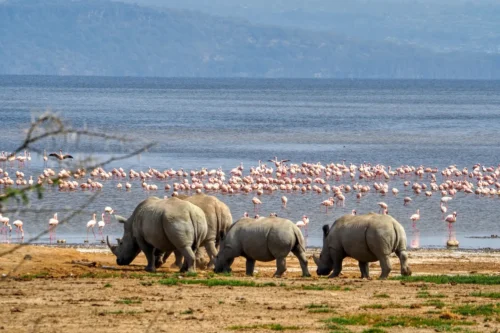
- Highlights: Famous for its flamingos and rhino sanctuary, Lake Nakuru is also home to lions, leopards, and a variety of bird species. The park’s alkaline lake attracts thousands of flamingos, creating a stunning pink hue.
- Activities: Game drives, bird watching, photography.
Lake Nakuru National Park, in Kenya, is famous for its rhinos, endangered Rothchild Giraffe, Out of Africa View point, flocks of pink flamingos (the numbers recently reduced due to water levels). The park is one of the best bird watching safari destinations in Kenya and Africa and has more than 450 species of birds have been recorded here, as well as a rich diversity of other wildlife. Lions, leopards, warthogs, waterbucks, pythons, and white rhinos are just some of the animals you might see, and the landscapes range from sweeping grasslands bordering the lake to rocky cliffs and woodland.
The park also protects the largest euphorbia candelabrum forest in Africa. These tall, branching succulents are endemic to the region and provide an interesting textural element to the arid landscapes.
Ol Pejeta Conservancy – a refuge for chimpanzees, rhinos, big five & more
- Highlights: A leading wildlife conservancy that is home to the last two remaining northern white rhinos. The conservancy also hosts a variety of other wildlife, including lions, elephants, and chimpanzees.
- Activities: Game drives, visiting the chimpanzee sanctuary, rhino tracking, night game drives.
About 200 kilometers north of Nairobi, near Mount Kenya National Park, Ol Pejeta Conservancy is a prime place for close-up wildlife encounters. Wildlife Conservation and sustainability are key at this 90,000-acre private game reserve, where you can view the Big Five of Africa (lion, leopard, rhino, elephant, and buffalo) as well as other animals such as cheetah, hyenas, zebra, and hartebeest, set against the breathtaking backdrop of snow-capped Mount Kenya.
The conservancy is perhaps best known for its endangered northern white rhinos and southern white rhinos, including Baraka, a blind black rhino, who lucky visitors might have the chance to feed.
You can view the wildlife on self-drive or guided tours, and entry includes a visit to the Sweetwaters chimpanzee sanctuary.
Day visitors are welcome, and if you want to extend your wilderness adventure, you can stay overnight in accommodations that range from bush camps and safari cottages to a charming colonial ranch house.
Lewa Wildlife Conservancy
- Location: Laikipia County
- Highlights: Known for its successful rhino conservation programs, Lewa is home to both black and white rhinos. The conservancy also hosts a variety of other wildlife, including elephants, lions, and Grevy’s zebras.
- Activities: Game drives, horseback safaris, guided bush walks, cultural visits to local communities.
Lewa Wildlife Conservancy, situated in northern Kenya at the foothills of Mount Kenya, is a renowned and pioneering wildlife conservancy spanning over 62,000 acres (250 sq km). What began as a cattle ranch in 1922 has evolved into a model for successful wildlife conservation and community engagement since its establishment as a non-profit conservancy in 1995.
Lewa is particularly celebrated for its critical role in rhino conservation. It serves as a safe haven for a significant percentage of Kenya’s eastern black rhinoceros population and also supports a healthy population of southern white rhinos. Their highly effective anti-poaching measures and successful breeding programs have made Lewa a key player in the fight to protect these endangered creatures.
Beyond rhinos, Lewa is home to a remarkable diversity of wildlife, including all of the “Big Five” (lion, leopard, elephant, rhino, and buffalo), as well as the largest single population of the endangered Grevy’s zebra in the world. Other notable species include cheetahs, wild dogs, reticulated giraffes, Beisa oryx, gerenuk, and over 490 species of birds.
What sets Lewa apart is its holistic approach to conservation, which recognizes that the long-term survival of wildlife depends on the well-being of surrounding communities. The conservancy invests heavily in community development programs focusing on education, healthcare, water, micro-enterprise, and youth empowerment, fostering a strong partnership between conservation efforts and local livelihoods.
Visiting Lewa offers an exclusive and intimate safari experience with opportunities for exceptional wildlife viewing, often with fewer crowds. Activities range from traditional game drives to guided bush walks, horseback safaris, and cultural interactions. Staying at one of Lewa’s eco-friendly lodges directly contributes to the conservancy’s vital conservation and community initiatives, making it a destination where you can witness firsthand the positive impact of responsible tourism.
Lake Naivasha & surrounding attractions:
(Explore Hell’s Gate National Park, Lake Naivasha & Crescent Island Game Sanctuary. Deep blue lakes, rich acacia forests, extinct volcanoes, waterfalls, imposing towers and bottomless gorges)
Ever sailed past hippos? How about trekking amongst zebras and giraffe? Or bicycling past impalas and buffalo? On this amazing one-day tour you’ll get to do all that and more.
You can’t get any closer to the wildlife than this. Imagine riding alongside a gazelle – that’s a story you’ll never forget and love to share. So, get ready for a fun, animal-filled adventure.
At Hell’s Gate National Park, you can Drive, Hike, Bike or Climb. The experience is sensational! Amazing scenery will surround you thanks to Fischer’s Tower, the Central Tower, and the park’s gorge.
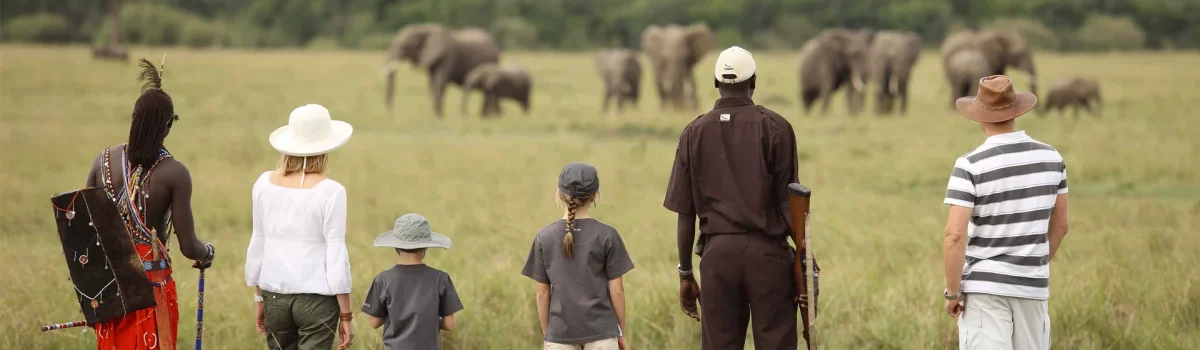
And we’ll go on a cycling safari. Riding over the savannah, past towering cliffs we’ll look for giraffe, buffalo, zebra, hartebeest, gazelle and possibly hyena. What a fun way to experience the wildlife!
After lunch we’ll take a water safari (boat ride) and enjoy views of Hippos and the nearby wildlife grazing at the shore. Don’t be surprised to see buffalo, zebra, eland and impala look up as you sail by.
Our final park is a private game sanctuary where we’ll take a guided walking safari. Crescent Island Sanctuary boasts more animals per acre than any other park in Kenya. You are certain to trek by diverse herds of wildlife – wildebeest, waterbuck, zebra, giraffe and gazelle amongst them.
Aberdare National Park
- Highlights: Known for its lush forests, waterfalls, and diverse wildlife, including elephants, leopards, and rare bongo antelopes. The park offers a different safari experience compared to the savannah parks.
- Activities: Game drives, hiking, bird watching, staying in tree lodges.
Nestled in the misty highlands of central Kenya, Aberdare National Park offers a dramatically different safari experience compared to the open plains that often come to mind. This captivating park protects the eastern slopes of the Aberdare Mountain Range, a vital water catchment area characterized by its lush, mountainous terrain, cascading waterfalls, bamboo forests, and moorland.
Established in 1950, Aberdare National Park is a sanctuary for a unique array of wildlife adapted to its high-altitude environment. It’s renowned for its good population of the elusive black rhino, as well as other fascinating creatures like the bongo (a rare and beautiful antelope), giant forest hog, serval cat, and numerous primate species. The park is also a haven for birdwatchers, boasting a diverse avian population.
Historically significant as a hideout for Mau Mau freedom fighters, Aberdare also holds the famous Treetops Lodge (where Elizabeth II (then Princess Elizabeth) was staying in 1952 when she acceded to the thrones of the United Kingdom) and The Ark Lodge, unique treehouse-style accommodations that have hosted royalty and offered exceptional wildlife viewing opportunities at their floodlit waterholes and salt licks.
Visiting Aberdare National Park offers a chance to immerse yourself in a cooler, greener, and more intimate safari setting, with opportunities for scenic drives, hiking amidst stunning landscapes, and the thrill of spotting wildlife adapted to this montane ecosystem. It’s a destination that provides a refreshing contrast to the typical savanna safari and promises a memorable encounter with Kenya’s diverse natural beauty.
Meru National Park
- Highlights: This park is less visited but offers a rich wildlife experience, including elephants, lions, leopards, and cheetahs. It is also known for its scenic landscapes, including rivers, swamps, and wooded grasslands.
- Activities: Game drives, bird watching, visiting the grave of Elsa the lioness (from “Born Free”).
Meru National Park, often described as a “complete wilderness,” offers a strikingly different and more remote safari experience in Kenya. Located east of Meru, approximately 350 km from Nairobi, this 870 sq km park boasts a rugged and largely unspoiled landscape bisected by the equator and characterized by bushland, wooded grasslands, and dense riverine forests fed by 13 rivers and numerous mountain streams that eventually flow into the Tana River.
Historically significant, Meru National Park is famous as the backdrop for Joy Adamson’s best-selling book and the award-winning movie “Born Free,” which chronicled her and her husband George’s life and research with lions and cheetahs, particularly the lioness Elsa. Elsa’s grave is located within the park, making it a poignant site for visitors.
Despite facing severe poaching in the late 1980s that decimated its rhino population, the Kenya Wildlife Service has successfully restored security and wildlife numbers in Meru. Today, the park is home to a rhino sanctuary with both black and white rhinos under 24-hour surveillance, offering excellent rhino viewing opportunities.
Beyond rhinos, Meru teems with diverse wildlife, including elephants, Grevy’s zebra, lions, cheetahs, leopards, hartebeest, hippos, buffalo, and reticulated giraffes. Birdwatchers will be delighted by the over 400 recorded bird species.
Visiting Meru National Park provides a sense of untamed Africa, away from the busier tourist circuits. Activities include game drives, bird watching, cultural visits to nearby communities, fishing safaris, and exploring scenic sites like Adamson’s Falls and Elsa’s Grave. The park offers a chance to experience a pristine wilderness and connect with the captivating story of conservation made famous by “Born Free.”
Mount kenya National Park – Climb Kenya’s highest mountain and second highest in Africa
- Highlights: While primarily known for its trekking opportunities, Mount Kenya National Park also offers wildlife viewing, including elephants, buffalo, and various antelope species. The park’s diverse ecosystems range from montane forests to alpine meadows.
- Activities: Trekking, game drives, bird watching.
In the Central Highlands, east of the Great Rift Valley, Mount Kenya National Park is a UNESCO World Heritage Site encompassing the country’s namesake highest mountain at 5,199 meters and providing the rare sight of equatorial snow. Formed by a series of volcanic eruptions, Mount Kenya is actually comprised of three glacier-cloaked peaks. The highest is Batian, although Nelion, the next highest, is a tougher climb. The lowest peak, Lenana, is considered the easiest climb, although unpredictable weather can pose challenges.
Scenery varies from glaciers, lakes, and mineral springs to alpine forest and dense pockets of bamboo. The diversity of flora and fauna provides rewarding opportunities for safaris. Among the wildlife here, you may spot black and white colobus monkeys, buffalo, elephant, tree hyrax, leopard, and hyena.
Mara Naboisho Conservancy
- Location: Adjacent to the Maasai Mara National Reserve
- Highlights: Offers a more exclusive and less crowded safari experience compared to the Maasai Mara. The conservancy is home to a high density of lions, elephants, and other wildlife.
- Activities: Game drives, guided bush walks, night game drives, cultural visits to Maasai villages.
Olare Motorogi Conservancy
- Location: Adjacent to the Maasai Mara National Reserve
- Highlights: Known for its low tourist density and high wildlife concentration, Olare Motorogi offers an intimate safari experience. It is home to the Big Five and other wildlife.
- Activities: Game drives, guided bush walks, night game drives, cultural visits to Maasai villages.
Borana Conservancy
- Location: Laikipia County
- Highlights: Focuses on the conservation of rhinos and other wildlife. The conservancy offers stunning landscapes and a variety of wildlife, including elephants, lions, and Grevy’s zebras.
- Activities: Game drives, horseback safaris, guided bush walks, rhino tracking.
Borana Conservancy is a remarkable 32,000-acre (130 sq km) private wildlife conservancy nestled on the foothills of Mount Kenya, in the Laikipia region of Kenya. This crucial protected area bridges the gap between the arid landscapes to the north and the more fertile indigenous forests to the south, making it a vital wildlife corridor and a biodiversity hotspot.
Originally a cattle ranch, Borana made a pivotal shift towards wildlife conservation in 1992, driven by a commitment to protect the declining wildlife populations and habitats. Today, it stands as a successful model of integrated conservation, where sustainable tourism and ranching work in harmony to benefit both wildlife and local communities.
Borana is particularly renowned for its significant rhino conservation efforts. In 2013, black rhinos were reintroduced to the conservancy, marking their return after over half a century. By dropping the fences with the neighboring Lewa Wildlife Conservancy, Borana has become part of a larger 90,000-acre landscape, creating one of East Africa’s most important continuous rhino habitats, home to a thriving population of both black and white rhinos. Their successful anti-poaching measures and high rhino birth rates underscore their commitment to the long-term survival of these endangered species.
Beyond rhinos, Borana boasts a rich diversity of wildlife, including all the “Big Five” (lion, leopard, elephant, rhino, and buffalo), as well as endangered species like Grevy’s zebra and African wild dog. The conservancy is also a birdwatcher’s paradise, with nearly 300 recorded species.
Visiting Borana offers an exclusive and authentic safari experience. Activities go beyond traditional game drives, with opportunities for guided bush walks, horseback safaris, mountain biking, and engaging in conservation activities like rhino tracking with the anti-poaching teams. Guests can also visit local communities and schools, gaining insight into Borana’s holistic approach to conservation that prioritizes both wildlife and the well-being of its neighbors. Staying at the Borana Lodge or other exclusive accommodations directly contributes to the conservancy’s vital conservation and community initiatives.
Taita Hills Wildlife Sanctuary
- Location: Taita-Taveta County
- Highlights: Part of the greater Tsavo ecosystem, this sanctuary offers diverse wildlife, including elephants, lions, and buffalo. The sanctuary is known for its stunning landscapes and luxury lodges.
- Activities: Game drives, guided bush walks, bird watching.
The Taita Hills Wildlife Sanctuary is a privately owned wildlife conservancy nestled in the heart of the Taita Hills in southeastern Kenya, adjacent to the renowned Tsavo West National Park. Spanning approximately 28,000 acres (110 sq km), this sanctuary forms a crucial wildlife corridor between Tsavo East and Tsavo West National Parks, facilitating the free movement of animals across this significant ecosystem.
Established in 1972, the sanctuary derives its name from the surrounding Taita Hills, which are part of the ancient Eastern Arc Mountains, a UNESCO-classified biodiversity hotspot. This unique location contributes to the sanctuary’s diverse habitats, ranging from open grasslands and acacia woodlands to rocky outcrops and riverine vegetation, supporting a rich array of flora and fauna.
Taita Hills Wildlife Sanctuary is home to a variety of wildlife, including elephants, lions, cheetahs, leopards, buffalo, giraffes, zebras, and numerous antelope species such as hartebeest, impala, lesser kudu, and dik-dik. Birdwatching is also excellent here, with over 300 recorded bird species, some of which are endemic to the Taita Hills region.
The sanctuary offers a more intimate and less crowded safari experience compared to the larger national parks, with opportunities for game drives (day and night), guided nature walks, and bird watching. Its two well-known lodges, Salt Lick Safari Lodge with its unique stilted architecture overlooking a waterhole, and Taita Hills Safari Resort & Spa, provide comfortable accommodation and excellent wildlife viewing opportunities.
Solio Ranch
- Location: Laikipia County
- Highlights: One of the oldest private rhino sanctuaries in Kenya, Solio Ranch is renowned for its successful rhino breeding program. The ranch also hosts a variety of other wildlife, including lions and buffalo.
- Activities: Game drives, rhino tracking, bird watching.
Solio Ranch, also known as Solio Game Reserve, is a privately owned wildlife conservancy situated in the valley between the slopes of Mount Kenya and the Aberdare Mountains in Kenya’s Central Province. This 17,500-acre (approximately 70 sq km) ranch holds the distinction of being Kenya’s oldest private rhino sanctuary and has played a pivotal role in the conservation of both black and white rhinoceros.
Established in 1970 on what was originally a cattle ranch, Solio’s primary focus became the breeding and protection of the then critically endangered black rhino. Its conservation efforts have been remarkably successful, leading to a thriving rhino population and making Solio a crucial source for restocking other protected areas across Kenya and even internationally.
Today, Solio Ranch is recognized as one of the most successful private rhino breeding sanctuaries in East Africa, boasting a significant population of both black and white rhinos. While rhinos are the star attraction, the conservancy is also home to a diverse array of other wildlife, including lions, leopards, cheetahs, buffalo, zebras, reticulated giraffes, and various antelope species.
Visiting Solio offers an exclusive and intimate safari experience focused on exceptional rhino sightings. With its relatively small size and high rhino density, encounters with these magnificent creatures are frequent. Activities include game drives, guided walks, and even horseback safaris, all set against the backdrop of stunning views of Mount Kenya and the Aberdare ranges. Staying at the Solio Lodge, the only accommodation within the conservancy, directly contributes to their vital conservation work, making it a meaningful destination for wildlife enthusiasts.
Chyulu Hills Conservancy
- Location: Between Tsavo West and Amboseli National Parks
- Highlights: Known for its stunning landscapes, including volcanic hills and lush forests, Chyulu Hills is home to elephants, lions, and a variety of bird species.
- Activities: Game drives, guided bush walks, horseback safaris, bird watching.
The Chyulu Hills Conservancy is a captivating and ecologically significant landscape in southeastern Kenya, located near the border with Tanzania and in the shadow of the majestic Mount Kilimanjaro. This sprawling conservancy encompasses a diverse terrain of rolling green hills, volcanic cones and craters (some only a few hundred years old), montane forests, open grasslands, and remarkable cave systems and lava tubes.
What makes the Chyulu Hills Conservancy particularly important is its role as a critical water catchment area, with rainfall percolating through the porous volcanic rock to feed numerous permanent springs and rivers that supply water to a vast region, including the coastal city of Mombasa. It also acts as a vital wildlife corridor connecting the greater Tsavo and Amboseli ecosystems, facilitating the movement of iconic species like elephants and other large mammals.
While perhaps not as densely populated with wildlife as some of Kenya’s more famous parks, the Chyulu Hills Conservancy is home to a variety of animals, including elephants, buffalo, giraffes, zebras, elands, and various antelope species, as well as predators like leopards and lions. It’s also a haven for birdlife.
Beyond its ecological importance, the Chyulu Hills Conservancy is notable for its partnership with the local Maasai communities, who have a deep historical and cultural connection to the land. Conservation efforts here often focus on sustainable land management, community empowerment, and mitigating human-wildlife conflict.
Visitors to the Chyulu Hills Conservancy can experience a more off-the-beaten-path safari, with opportunities for scenic drives, exploring the unique geological formations like the Leviathan Cave (one of the longest lava tubes in the world), hiking in the hills, and engaging with the local culture. The landscape offers breathtaking views, including the often snow-capped peaks of Kilimanjaro in the distance. It’s a place where you can appreciate the raw beauty of a volcanic landscape and the interconnectedness of conservation, community, and nature.
Loisaba Conservancy
- Location: Laikipia County
- Highlights: Offers diverse landscapes, including savannah, acacia woodlands, and riverine forests. The conservancy is home to elephants, lions, and Grevy’s zebras.
- Activities: Game drives, guided bush walks, horseback safaris, star beds (open-air sleeping platforms).
Loisaba Conservancy is a stunning 58,000-acre (231 sq km) wildlife conservancy and working ranch situated in the northern Laikipia region of Kenya. This privately owned conservancy is a vital part of a larger 15 million-acre landscape, acting as a crucial wildlife and livestock movement corridor connecting Laikipia to Samburu and Isiolo counties.
Loisaba boasts a diverse landscape with rolling hills, escarpments, valleys, and two permanent rivers, the Ewaso Nyiro and the Ewaso Narok, along with numerous permanent springs, making it an attractive habitat for wildlife year-round. The conservancy is home to over 260 bird species and 50 mammal species, including a significant elephant population (over 800), large herds of buffalo, the endangered Grevy’s zebra, reticulated giraffe, and the beautiful greater kudu. Predators thrive here, with healthy populations of lions, leopards, cheetahs, and even the returning African wild dog.
What makes Loisaba special is its holistic approach to conservation, integrating wildlife protection with sustainable livestock management and community development. The conservancy provides employment for over 300 local people and supports various community projects, including schools and healthcare clinics.
Visitors to Loisaba can enjoy a range of exclusive and adventurous activities, including game drives (day and night), guided bush walks, horseback safaris, camel trekking, mountain biking, and cultural visits to local Samburu villages. Loisaba is also actively involved in wildlife research and conservation efforts, including projects focused on reticulated giraffes, leopards, lions, and elephants, and is a key location for the reintroduction of black rhinos in the region.
Staying at one of Loisaba’s eco-friendly lodges and star beds offers a unique and immersive safari experience, with breathtaking views and the chance to contribute directly to the conservancy’s important work in protecting this remarkable wilderness and supporting its communities.
Non-mainstream Wildlife parks and destinations best for bird watching:
Kenya is renowned as a premier birdwatching destination, boasting an incredible diversity of habitats that support over 1,100 recorded bird species, a number only surpassed by a couple of other countries in Africa. This rich avifauna includes resident species, endemics, and a large number of migratory birds from Europe and Asia (Palearctic migrants) and within Africa (intra-African migrants), particularly between November and April.
- Lake Bogoria: Famous for its spectacular flamingo gatherings and hot springs, which attract unique birdlife.
- Lake Baringo: A top spot for waterbirds and raptors, including the Goliath Heron. The cliffs surrounding the lake are also home to interesting species.
- Lake Elementaita: Another Rift Valley soda lake known for large flocks of flamingos and other waterbirds.
- Shimba Hills National Reserve: Located near the coast, Shimba Hills is known for its lush greenery and wildlife, including elephants, giraffes, and the rare sable antelope. The reserve also offers stunning views of the Indian Ocean.
- Lake Turkana: This desert lake offers a chance to see desert and waterbird species in a dramatic setting.
- Kakamega Forest: Kenya’s only tropical rainforest is a crucial habitat for numerous forest bird species, some found nowhere else in the country.
- Arabuko-Sokoke Forest: A globally significant coastal forest known for its endemic species like the Sokoke Scops Owl and Clarke’s Weaver.
- Gatamaiyu Forest: Part of the larger Kereita Forest near Nairobi, offering montane forest birding.
- Karura Forest Reserve (Nairobi): A lush urban forest with scenic trails and rich birdlife, easily accessible from Nairobi.
- Mida Creek: A rich mangrove ecosystem attracting waders, terns, and shorebirds, including the Crab Plover.
- Sabaki River Estuary: A vital site for migratory waders and estuarine birds.
Best beach destinations in Kenya:
Kenya’s coastline along the Indian Ocean is a breathtaking tapestry of pristine beaches, swaying palm trees, and the warm turquoise waters. Offering a diverse range of experiences, from bustling resort towns to tranquil, secluded escapes, Kenya’s beaches provide the perfect complement to a thrilling safari adventure or a standalone tropical getaway. Whether you seek vibrant nightlife, world-class watersports, rich Swahili culture, or simply a place to unwind under the African sun, Kenya’s coastal destinations promise an unforgettable escape.
Mombasa beach destinations & holidays
Make your holiday at this world-famous shore. The Kenya coast is pristine, unspoiled and the perfect place to begin your safari adventure.
And Mombasa is the perfect beachcation destination with its local markets, history, museums and beaches. Kenya’s largest coastal city, Mombasa is an exciting blend of local and international cultures – African, Indian and Arabic.
Key attractions: Haller Park Sanctuary, Fort Jesus, Mombasa Marine National Park & Reserve, Mamba village e.t.c
Mombasa and its surrounding beaches are also a great jumping off point for safaris throughout Kenya.
Malindi beach and Watamu Beach
Which resort to choose for your beach holiday – Malindi or Watamu? As always, it’s your choice. Both offer spectacular stretches of unspoiled beach. Both have an international charm with an exciting dining scene. And both feature marine parks for crystal-clear swimming.
Of course, both have a wonderful year-round climate and are just about 120 km North from Mombasa.
Key attractions: Jumba la Mtwana, Bio-Ken Snake Farm & Laboratory, Watamu Turtle Watch (Wildlife Reserve), Watamu marine National Park, Arabuko Sokoke Forest Reserve & Mida Dhow, Vasco da Gama Pillar, House of Columns e.t.c.
Diani beach (Voted Africa’s best beach destination):
Everything about Diani Beach is long, low and laid back. This pristine flawless, long stretch beach is lined with a lush facade of forest which nestles most of the hotels and resorts. Voted three times Africa’s leading beach destination, the beach-line here is easy-going with a colourful mix of families, backpackers, water-sports enthusiasts, nomads and honeymooners. You can snorkel the sparkling waters, laze on a hammock and when you get restless… safari!
Types of Kenya Safaris:
- Classic Wildlife Safaris:
- Game drives in national parks and reserves to spot the Big Five and other wildlife.
- Cultural Safaris:
- Interact with local communities like the Maasai, Samburu, or Turkana tribes.
- Adventure Safaris:
- Combine safari with activities like hot air ballooning, walking safaris, and camel treks.
- Family Safaris:
- Kid-friendly safaris with child-friendly accommodations and activities.
Tips for Planning a Kenya Safari:
- Best Time to Visit: Consider the dry seasons (January-February and July-October) for optimal wildlife viewing.
- Accommodations: Choose from luxury lodges, tented camps, or budget-friendly options based on your preferences.
- Transportation: Opt for safari vehicles with knowledgeable guides or consider flying safaris for longer distances.
- Activities: Include game drives, guided walks, birdwatching, and cultural interactions in your itinerary.
- Health and Safety: Take necessary vaccinations and precautions against malaria, and follow park rules for wildlife viewing.
- Local Guides: Engage local guides for insightful wildlife tracking and cultural experiences.


- Kenya flying safaris
8 Days Kenya Luxury Sky Air safari Exploring Meru, Loisaba & Masai Mara
Original price was: $13,000.00.$11,000.00Current price is: $11,000.00. - Kenya flying safaris
10 Days Kenya Luxury Sky Air safari Exploring Amboseli, Laikipia & Masai Mara
Original price was: $14,000.00.$12,500.00Current price is: $12,500.00. - Tanzania flying safaris
8 Days Tanzania Luxury Sky Air safari Exploring Tarangire, Ngorongoro & Serengeti
Original price was: $13,000.00.$11,000.00Current price is: $11,000.00. - Tanzania flying safaris
10 Days Tanzania Luxury Sky Air safari Exploring Tarangire, Lake Manyara, Ngorongoro & Serengeti
Original price was: $14,500.00.$12,500.00Current price is: $12,500.00. - Kenya flying safaris
2 Days Masai Mara Kenya luxury flight safari from Nairobi
Original price was: $1,200.00.$925.00Current price is: $925.00. - Kenya flying safaris
3 Days Masai Mara Kenya luxury flight safari from Nairobi
Original price was: $1,500.00.$1,185.00Current price is: $1,185.00. - Kenya flying safaris
4 Days Masai Mara Kenya luxury flight safari from Nairobi
Original price was: $1,600.00.$1,275.00Current price is: $1,275.00. - Kenya Road safaris
3 Days Masai Mara Kenya budget private road safari from Nairobi
Original price was: $800.00.$695.00Current price is: $695.00. - Kenya Road safaris
3 Days Masai Mara Kenya medium luxury road safari from Nairobi
Original price was: $900.00.$745.00Current price is: $745.00. - Kenya Road safaris
3 Days Masai Mara Kenya luxury road safari from Nairobi
Original price was: $1,600.00.$1,175.00Current price is: $1,175.00. - Kenya Road safaris
4 Days Masai Mara Kenya medium luxury road safari from Nairobi
Original price was: $1,300.00.$1,045.00Current price is: $1,045.00. - Kenya Road safaris
4 Days Masai Mara Kenya luxury 4×4 road safari from Nairobi
Original price was: $2,500.00.$2,245.00Current price is: $2,245.00. - Kenya Road safaris
5 Days Kenya road safari from Nairobi: Masai Mara, Lake Naivasha & Lake Nakuru
Original price was: $1,500.00.$1,290.00Current price is: $1,290.00. - Kenya Road safaris
6 Days Kenya luxury safari: Amboseli, Naivasha & Masai Mara
Original price was: $1,900.00.$1,610.00Current price is: $1,610.00. - Kenya Road safaris
7 Days Kenya luxury safari to Ol Pejeta, Lake Nakuru, Lake Naivasha & Masai Mara
Original price was: $2,500.00.$2,080.00Current price is: $2,080.00. - Kenya flying safaris
10 Days Kenya Signature Luxury flight safari – Samburu, Masai Mara & Lumo Conservancy
Original price was: $12,320.00.$9,850.00Current price is: $9,850.00.








- Kenya flying safaris
8 Days Kenya Deluxe Flying Wild Adventure Safari from Nairobi
- Kenya Road safaris
4 Days Lake Nakuru & Masai Mara Kenya Luxury road Safari from Nairobi
- Kenya Road safaris
3 Days Amboseli National Park Kenya luxury safari from Nairobi
- Kenya Road safaris
3 Days Amboseli and Tsavo Kenya road Safari from Nairobi
- Kenya flying safaris
10 Days Kenya Luxury Sky Air safari Exploring Amboseli, Laikipia & Masai Mara
Original price was: $14,000.00.$12,500.00Current price is: $12,500.00. - Kenya flying safaris
8 Days Kenya Luxury Sky Air safari Exploring Meru, Loisaba & Masai Mara
Original price was: $13,000.00.$11,000.00Current price is: $11,000.00. - Kenya Road safaris
7 Days Kenya Safari tour- Masai Mara, Lake Nakuru, Lake Naivasha & Amboseli
$0.00